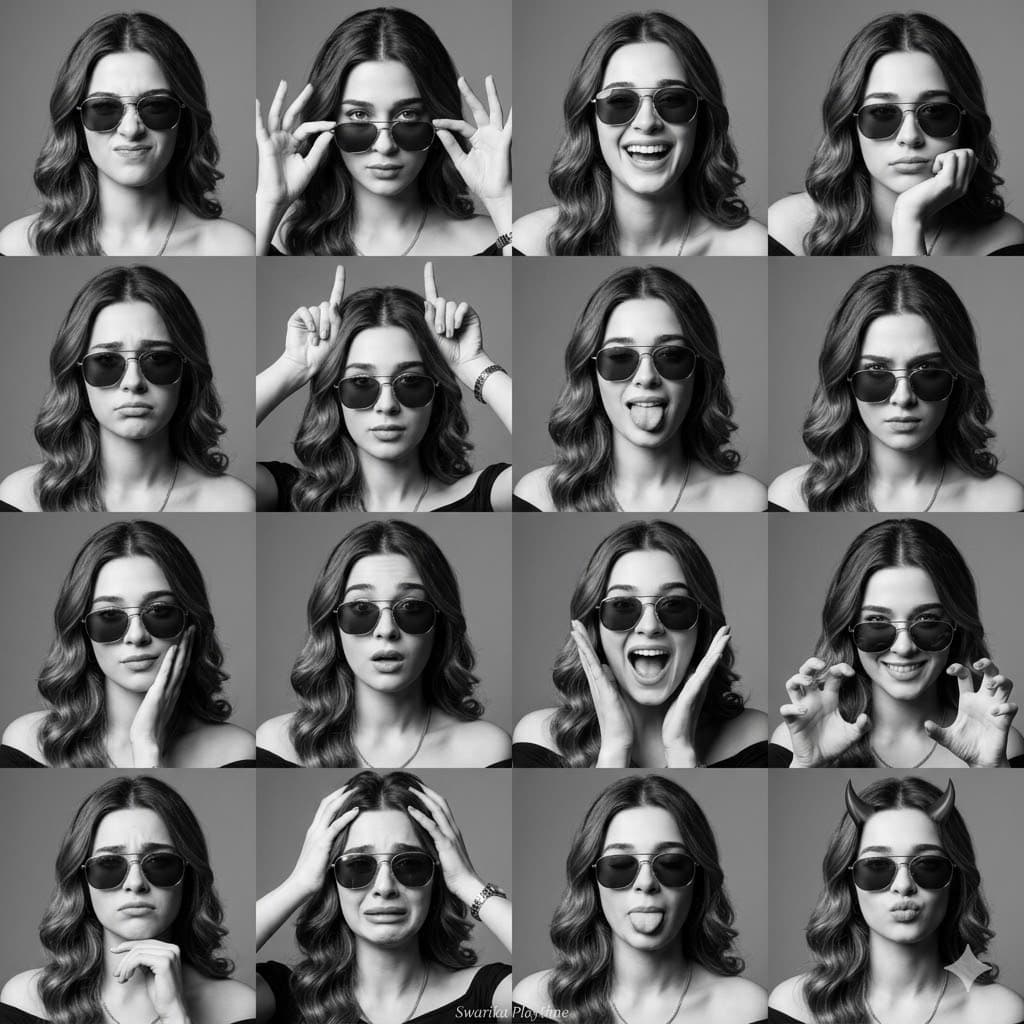
提示词详情
Google Gemini Nano banana 2 pro Prompt👇 { "generation_request": { "meta_data": { "task_type": "black_and_white_photobooth_expression_grid_4x4", "language": "en", "priority": "highest", "version": "v3.0_BW_PHOTOBOOTH__GIRL_4X4" }, "input": { "mode": "image_to_image", "reference_image_usage": "very_high", "preserve_identity": true, "preserve_facial_features": true, "preserve_hairstyle": true, "notes": "Use the reference image as the primary identity anchor. Maintain 100% facial accuracy, proportions, and natural skin texture. Keep hairstyle consistent across all panels. Every frame must feature the same girl wearing sunglasses. Expressions should vary while identity remains locked." }, "output": { "aspect_ratio": "1:1", "resolution": "ultra_high", "num_images": 1, "layout": { "type": "grid", "rows": 4, "cols": 4, "gutter": "thin", "panel_consistency": "very_high" }, "sharpness": "crisp_photobooth", "grain": "subtle_analog_bw" }, "scene": { "concept": " black-and-white photobooth contact sheet with expressive girl wearing sunglasses in every panel", "environment": "clean flat neutral backdrop, no props", "lighting": { "style": "direct photobooth flash", "key_light": "front-facing flash, slightly hard but flattering", "shadows": "soft minimal shadows behind subject", "avoid": "cinematic lighting, colored lights, dramatic shadows" }, "camera": { "lens": "50mm", "distance": "tight head-and-shoulders framing", "focus": "eyes sharp behind sunglasses in every panel" } }, "subject": { "type": "girl (reference person)", "wardrobe": "modern fashion styling — sleek off-shoulder top, fitted minimal chic outfit with aesthetic (no logos)", "accessories": "high-end designer sunglasses in every panel (stylish variations in angle/tilt but consistent design language)", "hair": "same hairstyle preserved across all panels", "makeup": "soft glam, natural skin texture, slightly enhanced lips and subtle contour", "vibe": "confident, playful, expressive, fashion editorial feel", "anatomy_rules": "perfect facial symmetry, no distortion" }, "expression_set": { "panel_01": "scrunched smile, playful energy", "panel_02": "intense confident stare with fingers framing sunglasses", "panel_03": "big joyful laugh, head slightly tilted", "panel_04": "bored unimpressed pose, chin resting on hand", "panel_05": "sad pout expression, soft emotional look", "panel_06": "goofy playful horns gesture above head", "panel_07": "tongue out, cheeky attitude", "panel_08": "sharp angry glare, strong attitude", "panel_09": "flirty pose, hand touching cheek", "panel_10": "surprised expression, raised brows", "panel_11": "excited scream pose, hands near face", "panel_12": "mischievous grin with claw-like hand pose", "panel_13": "confused frown, thoughtful look", "panel_14": "dramatic crying pose, hands on head", "panel_15": "eyes closed, tongue out playful vibe", "panel_16": "duck face with playful devil horns gesture" }, "style": { "color": "pure black and white", "contrast": "medium-high fashion contrast", "background": "flat gray seamless backdrop", "finish": "clean photobooth aesthetic with slight analog grain", "aesthetic": " editorial meets classic photobooth" }, "branding": { "watermark": "Swarika Playtime", "placement": "bottom center or subtly across grid edge", "style": "small, elegant, semi-transparent" }, "quality_control": { "identity_lock": "strict", "hands_priority": "high", "sunglasses_consistency": "mandatory in all panels", "avoid": [
探索更多
发现更多高质量提示词,从他人的创意中获取灵感。
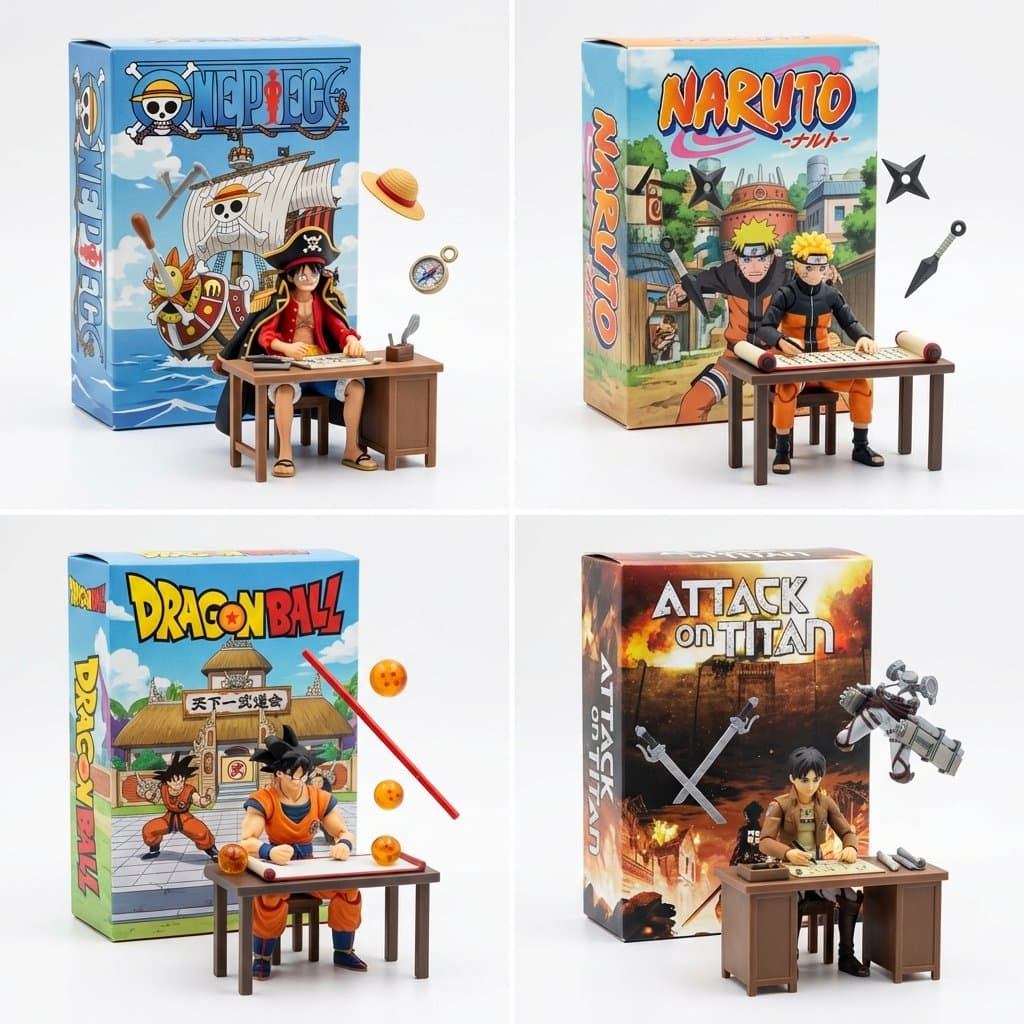
Still working on fun ways to visualize manga and anime. This works pretty well 2x2 grid, do this for famous manga <spatial_topology> [ seamless studio backdrop (pure white) ] [ product box (upright) ] ( 2d graphic art of [the_creation] ) ( bold typography: "ai inferred title" ) \ | / \ [box] / <-- floating [tools] crossing the \ [lid] / boundary of the box into reality \ / [ foreground: 3d action figure of [profession] ] ( sitting at [workstation], intensely focused ) ( suspended [tools] frozen in mid-air around them ) </spatial_topology> instruction: render macro toy photography. create a sharp material contrast: the background box is flat printed cardboard. the foreground figure and floating tools are tangible injection-molded plastic.
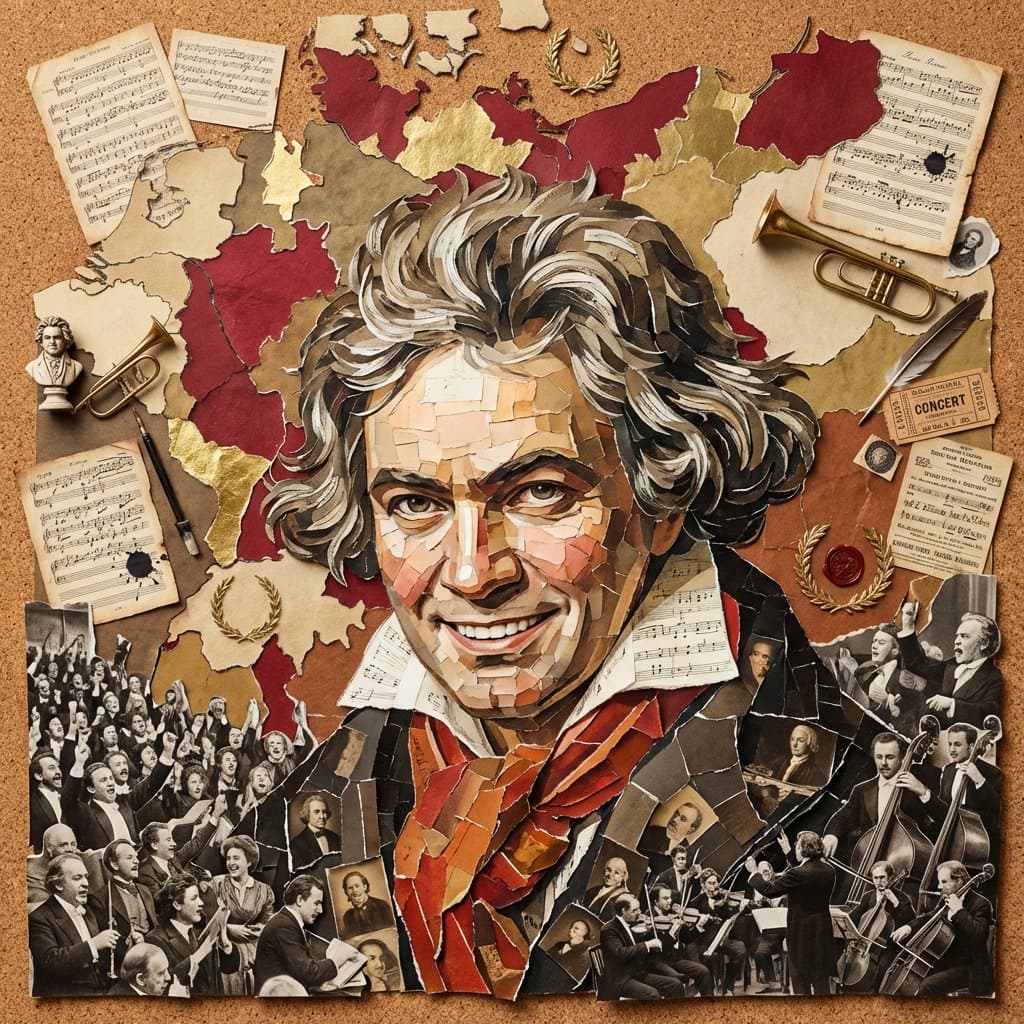
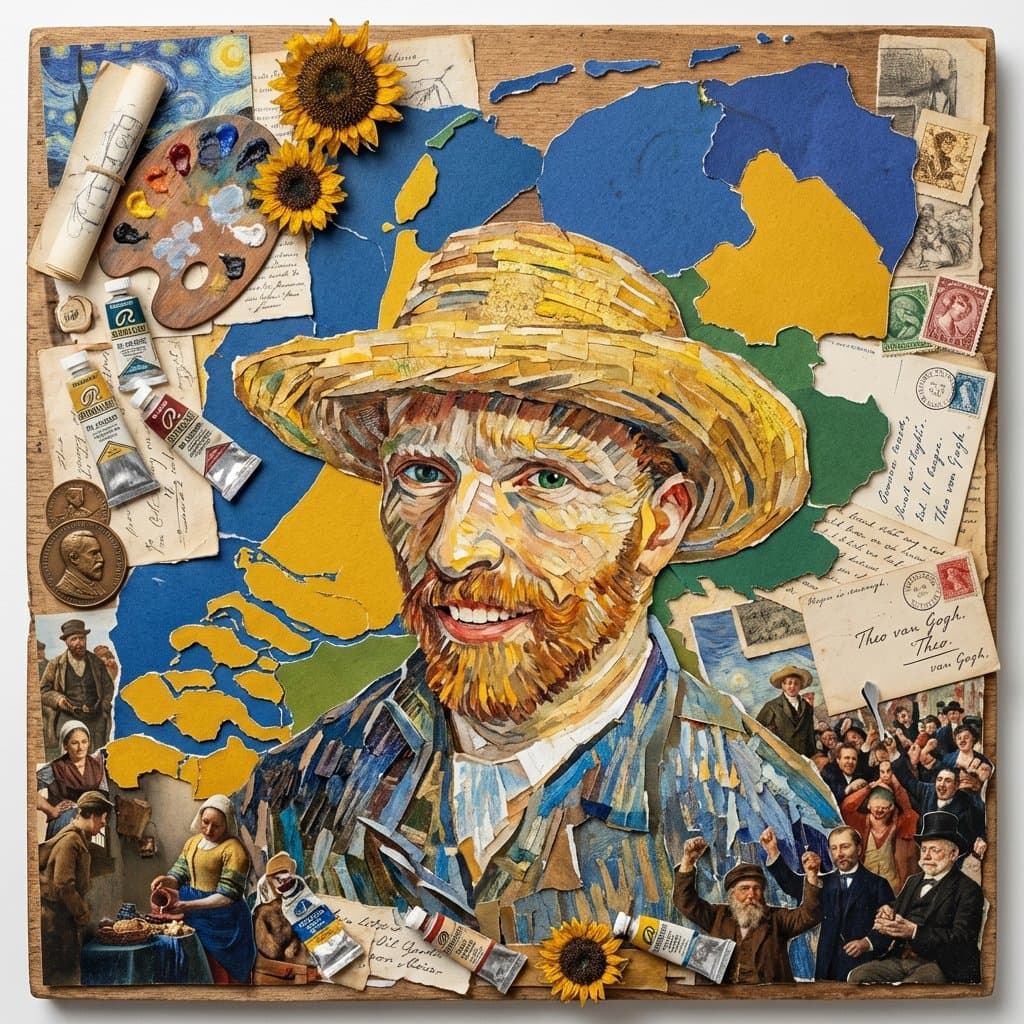
I modified my Pele prompt, so it now works for any famous person. Do this for beethoven: <instruction> 1. Inference Engine Input A is a Globally Recognized Figure (e.g., Pelé, Muhammad Ali, Frida Kahlo, Winston Churchill). Deconstruct the figure's legacy into 4 Collage Assets : The Anchor (The Portrait): Identify a recognizable, smiling, front-facing portrait of the individual. The Terrain (The Map): Identify the outline of their home country or most significant region. (e.g., Pelé -> Brazil. Churchill -> United Kingdom. Kahlo -> Mexico). The Colors (The Theme): Identify the dominant colors associated with their nation or profession. (e.g., Pelé -> Yellow, Green, Blue. Kahlo -> Vibrant primary colors and earth tones). The Ephemera (The Clutter): Identify specific historical objects related to their career. (e.g., Pelé -> Tiny World Cup trophies, old match tickets, cheering fans. Churchill -> Telegraphs, medals, cigars). 2. Container (The Collage Board): Goal: A "Mixed-Media Mosaic" Flat Lay. The Base: A square piece of heavy cardboard, corkboard, or rough wood lying flat. The Technique: The entire image is a densely packed physical collage made of torn paper, vintage photographs, ticket stubs, and small 3D objects glued to the board. 3. The Mosaic Portrait The Construction: The portrait (Input A) dominates the center of the frame. The Illusion: The face is NOT a single painted image. It is a "Photo Mosaic" created by hundreds of tiny, distinct, overlapping rectangular and torn pieces of paper (e.g., tiny faces, skin-toned paper scraps, historical photos). Detail: The viewer must be able to see the individual paper edges and overlapping corners making up the eyes, smile, and hair. 4. The Background The Map: Behind the portrait, the outline of the "Terrain" (Step 1) is constructed using larger, torn pieces of solid-colored paper matching the "Theme" colors (e.g., Green and Yellow paper forming Brazil). The Crowd: The bottom corners and edges are filled with cut-out photos of cheering crowds, teammates, or relevant historical figures reacting to the main subject. The Detritus: The remaining empty space is jammed with the "Ephemera" (vintage tickets, logos, handwritten notes, small 3D pins/trophies glued to the surface). 5. Lighting & Atmosphere: Lighting: Flat Studio Copy-Stand Lighting. Even, bright illumination from above that casts very tiny, sharp drop shadows underneath the curled edges of the torn paper and 3D objects, emphasizing the physical, layered texture of the collage. Texture: High fidelity. The grain of the paper, the glossy sheen of the tiny photos, and the glue marks should be visible. Output: ONE image, 1:1 Aspect Ratio, Macro Photography of Mixed Media Art, "Scrapbook Mosaic" aesthetic, Horror Vacui (no empty space). </instruction>
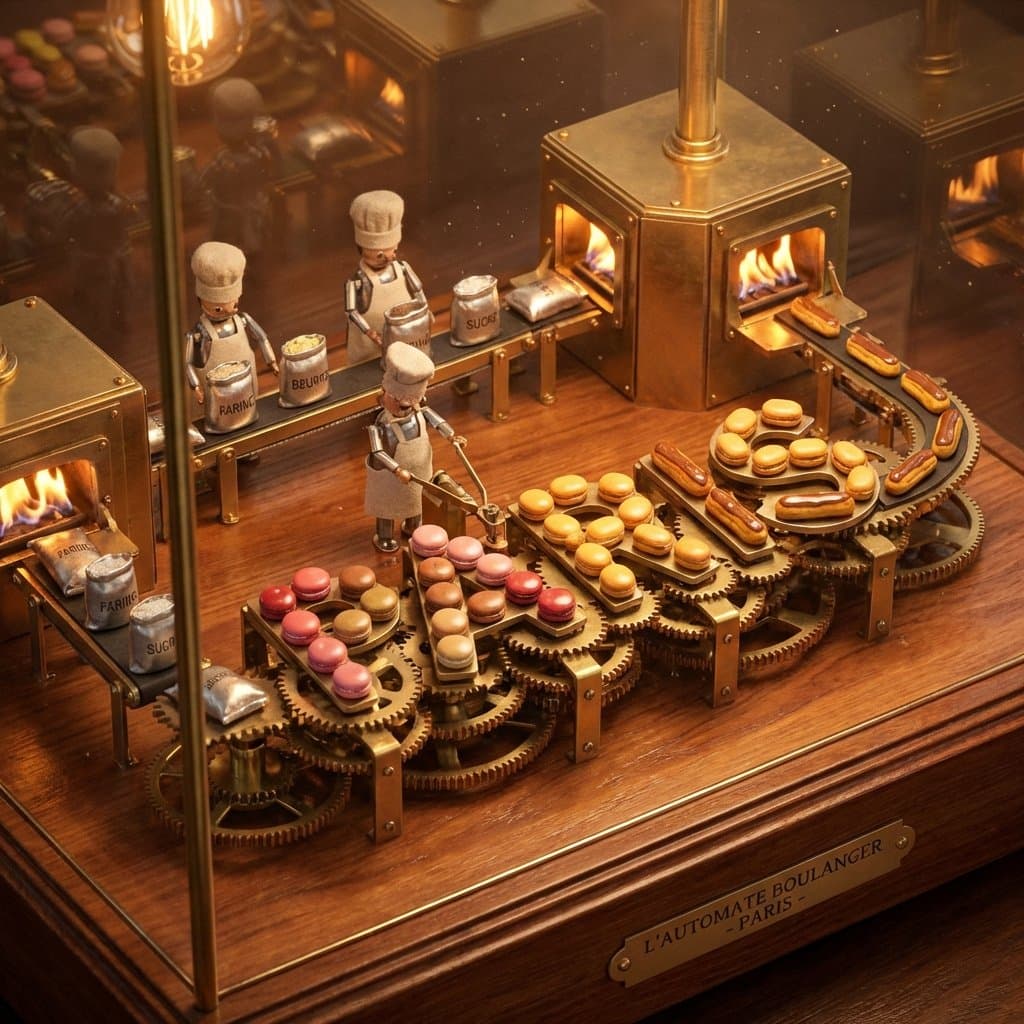
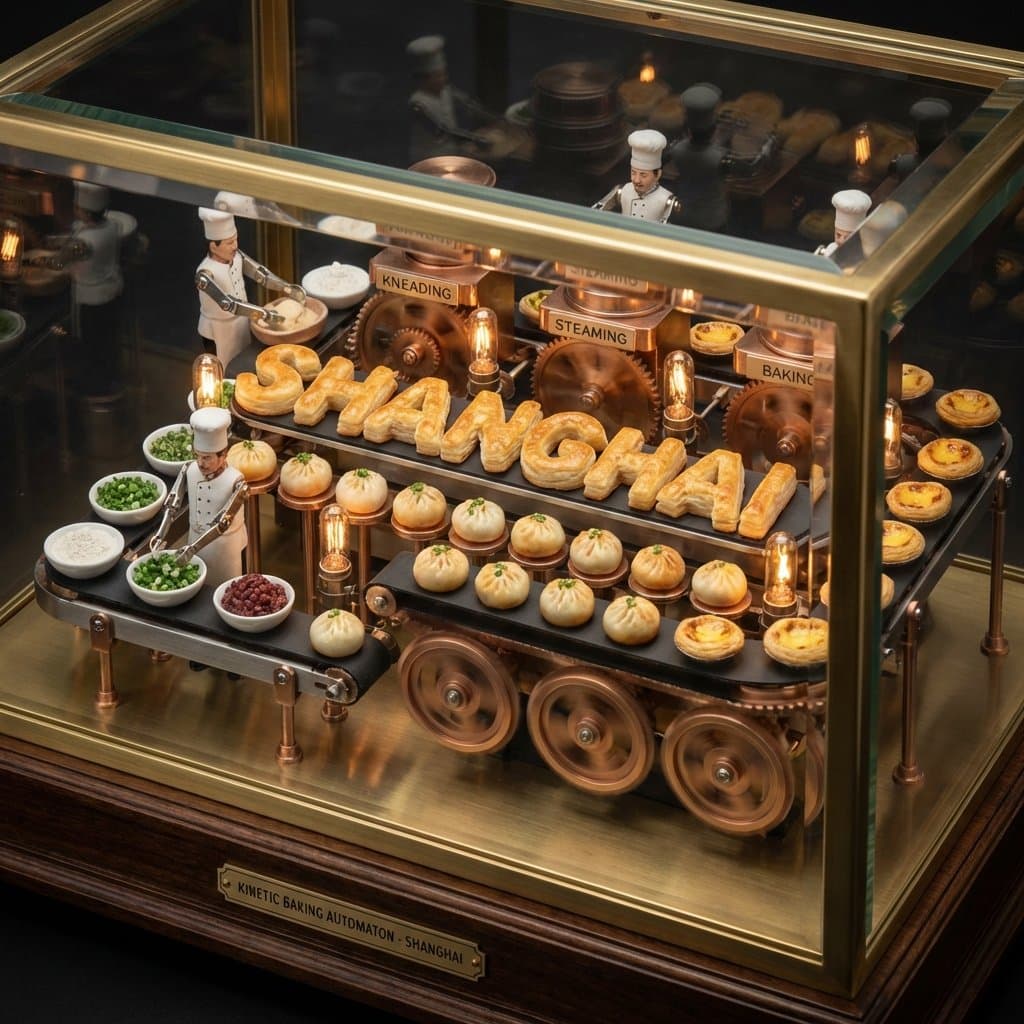
Pastry city concept. Fun experiment inspired by a food infographic I made a while back. do this for paris: kinetic baking automaton display concept: a mechanical wind-up diorama where the pastry city name assembles itself in perpetual motion through visible baking stages. input variables: [insert city name] [insert signature baked goods] [insert essential ingredients] [insert process steps] workflow: base setup: ornate brass-and-glass automaton on a wooden base with visible gears. core action/composition: tiny chef automata move [insert essential ingredients] through [insert process steps], gradually forming the rotating [insert city name] letters from [insert signature baked goods]. variants and details: pendulum ovens and conveyor belts delivering fresh pastries to complete each letter. narrative/interactive elements: endless cycle of creation turning raw ingredients into cultural icon. god-level details: warm tungsten lighting with motion blur on gears, polished metal and fresh pastry gloss, macro angled view, 8k hyper-realistic kinetic render with satisfying rhythm. </instructions>
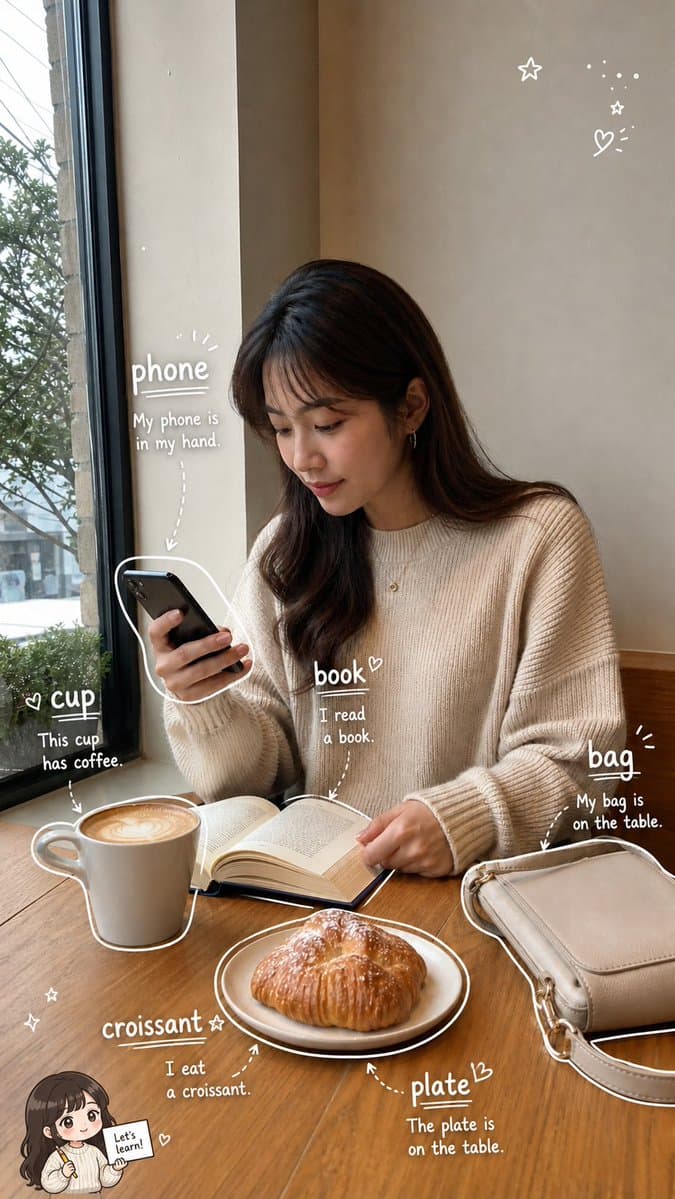
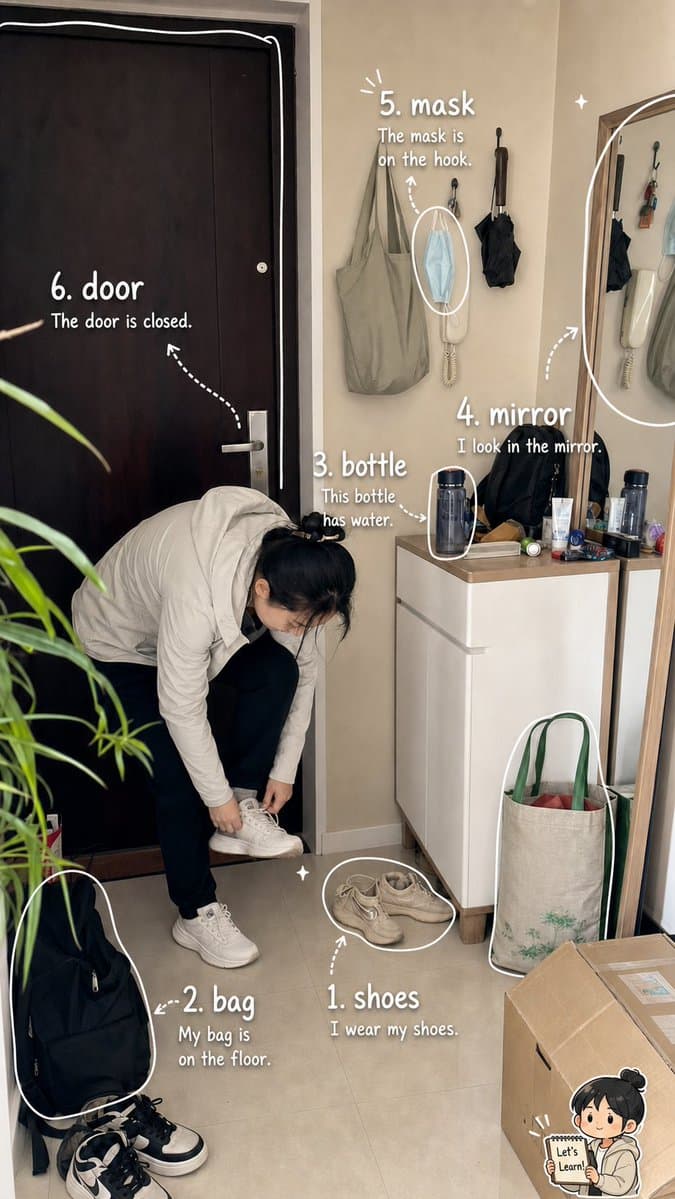
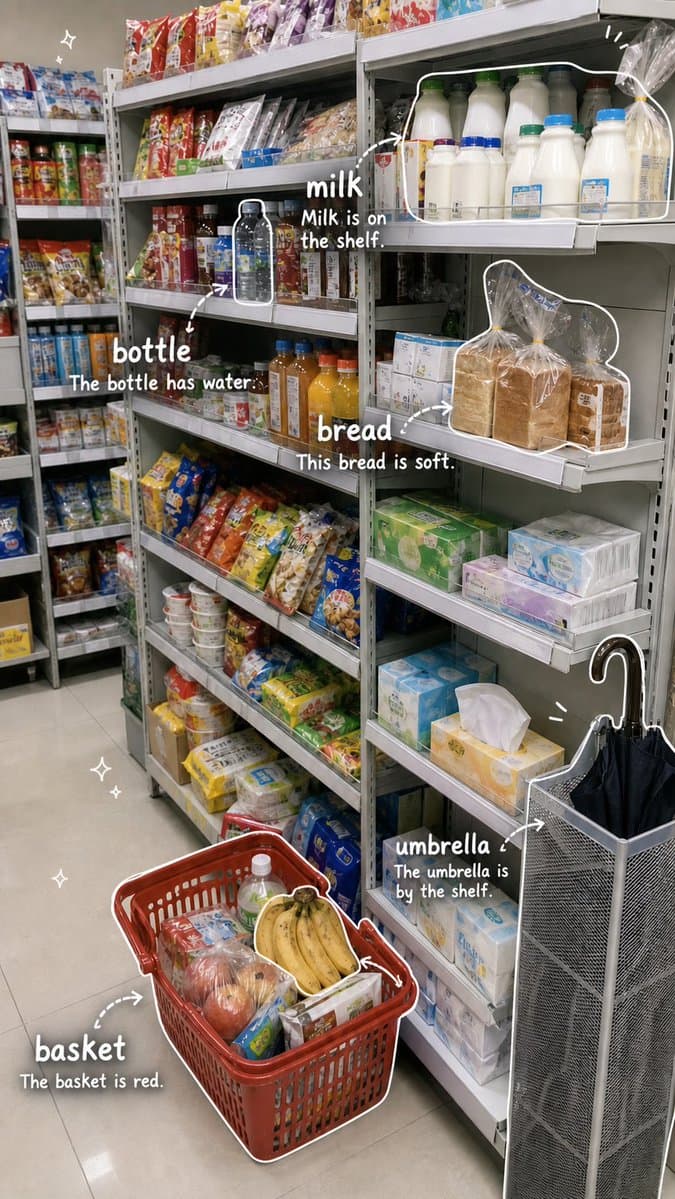
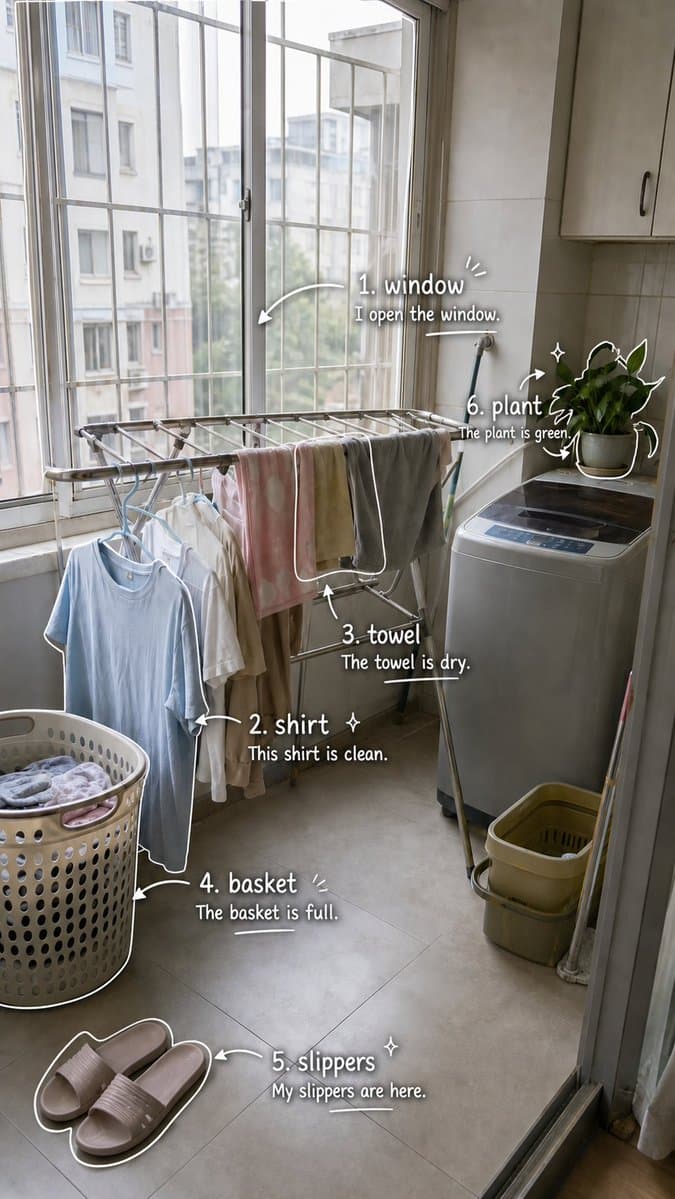
《看图学单词手账》提示词: 请根据用户上传的生活照片(Image A),创作一张高完成度的「看图学单词手账照 / Photo Vocabulary Scrapbook」。 【核心任务】 基于用户上传的真实生活照片,在尽量保留原图真实感与主体内容的基础上,把这张照片增强成一张“轻学习手账风”的英语单词学习图。 请自动识别照片中清晰、常见、适合英语初学者学习的日常物品,并用白色细线手绘风格圈出物品,再为每个物品添加英文单词和简短英文例句,让整张图看起来像一页清爽、自然、适合社交媒体发布的 photo vocabulary scrapbook。 【原图保留要求】 Image A 是用户上传的原始照片,也是本次创作的基础底图。 请尽量保留原图中的: - 真实人物(如果有) - 场景环境 - 物体摆放关系 - 光线氛围 - 构图结构 - 照片原本的生活感与真实摄影感 不要大幅改动原图,不要把照片整体变成插画,不要破坏照片的真实感。 如果照片中有人物,不要换脸,不要明显改变人物身份与姿态。 【物品识别规则】 请优先识别 6 个日常生活中常见、清晰可见、适合英语学习的物品。 如果画面中合适物品不足,或者画面空间不足以清晰呈现 6 个标注,则可降为 5 个。 不要为了凑数而选择太小、太模糊、太抽象或不常见的物品。 优先选择: - 日常高频物品 - 容易理解和学习的名词 - 视觉上清晰可辨认的物品 【标注呈现方式】 请用白色细线手绘风格对每个被识别的物品进行标注。 要求如下: - 用白色细线沿着物体边缘轻轻描出轮廓 - 线条要像随手画上去的一笔画,轻松自然,不要太工整 - 可加入少量箭头、虚线、圈线或辅助指向线 - 标注风格要自然、有留白、像手账笔记 - 不要把整张图画满,不要过度装饰 - 标注应尽量分布均衡,形成自然阅读路径 【文字内容格式】 每个物品旁边只写两部分内容: 1. 英文单词(最突出、字号最大) 2. 一句简短英文例句(比单词小一号) 不要写中文,不要写复杂英文释义,不要写太长的解释段落。 整体以“纯英文轻学习标注”为主。 句子要求: - 简短 - 自然 - 容易理解 - 适合英语初学者 - 难度控制在 A1–A2 - 尽量使用基础词汇和基础句型 - 每句尽量短,建议 4–8 个英文单词左右 - 不要写复杂从句,不要使用生僻词 【文字排版要求】 - 英文单词最突出 - 例句略小一号 - 文字整体清晰可读 - 不要让文字块过大 - 文字颜色以白色为主 - 如有需要,可加极轻微描边或阴影,保证在照片背景上清晰可读 - 保持手写笔记感,不要像正式排版海报 【Chibi 学习助手规则】 可选加入 1 个很小的 chibi 学习助手,但必须遵循以下规则: 1. 如果照片中有清晰可见的人物: 可以加入 1 个小型 chibi 学习助手。 该助手应基于照片中的主要人物形象延展而来,保留人物的基本发型、服装特征或整体气质,像一个迷你英语学习小助手。 2. 如果照片中没有人物,但有清晰可见的动物或宠物: 也可以加入 1 个很小的动物学习助手。 该助手应基于该动物形象进行可爱化处理,并与原动物保持一定对应关系。 3. 如果照片中既没有人物,也没有动物: 不要加入任何 chibi 学习助手。 4. chibi 学习助手只能有 1 个,而且必须很小: - 放在角落或边缘区域 - 不能成为主视觉 - 不能遮挡主体物品、英文单词或例句 - 只能作为轻微辅助装饰 5. chibi 学习助手的动作可以是: - 拿着单词卡 - 拿着铅笔 - 拿着小本子 - 轻轻指向某个单词 - 做出学习、提醒、陪伴的可爱动作 【手绘辅助元素】 可以在画面空白处加入少量辅助性的手绘装饰元素,用于增强 scrapbook / 手账学习感,例如: - stars - sparkles - arrows - circles - underlines - dotted lines - tiny hearts - cute little icons 要求: - 数量少 - 点到为止 - 以白色为主 - 不要太花 - 不要喧宾夺主 - 不能影响物品学习标注的清晰度 【整体构图要求】 整体视觉应以“原始生活照片 + 物品学习标注”为主。 构图逻辑如下: - 保持原图主体清晰 - 6 个(或 5 个)英语单词标注分散在画面中 - 白色手绘线把物品与文字自然连接起来 - 标注布局均衡,不要都挤在一个区域 - 优先避开人物脸部和主体核心区域 - 让观众的阅读顺序自然形成: 先看照片 → 再看被圈出的物品 → 再读单词 → 再读例句 【整体风格关键词】 realistic lifestyle photo, photo vocabulary scrapbook, white hand-drawn annotations, English vocabulary notes, clean and natural layout, light learning content, soft doodle style, social-media-friendly, minimal scrapbook aesthetic, casual study notes, cute but clear. 【避免事项】 请避免以下问题: - 标注数量过多 - 物品选择不典型 - 文字太长 - 例句太复杂 - 手绘线条太乱 - 元素堆得太满 - 遮挡主体 - 把照片改得不像真实照片 - chibi 助手太大或太抢眼 - 没有人物/动物却硬加 chibi - 文字乱码 - 英文错误或不自然 - 排版拥挤难读 【最终目标总结】 把一张普通生活照,变成一页: “可爱、清爽、自然的英文单词学习手账图”。