Trending Women's Hairstyles 2026
Explore trending women’s hairstyles for 2026, from dimensional waves and graphic bobs to split color, braids, curls, and statement updos.
A hairstyle can change the way a portrait feels before anyone notices the individual strands. A blunt bob looks intentional and graphic, long waves look soft and dimensional, and a high updo can turn a familiar outfit into something ceremonial. The most interesting trending women's hairstyles for 2026 combine a clear shape with one memorable detail: a ribbon, a vivid color panel, a strong fringe, a defined curl pattern, or an unexpected silhouette.
This guide is a practical visual roundup built from Veyvia's 40-style female hairstyle reference collection. It explains the main directions, shows distinctive examples, and helps you turn a reference image into a useful haircut or color brief. Treat the examples as starting points rather than rules: the best version is the one that fits your texture, schedule, and comfort level.
Quick Reference: 2026 Hairstyle Trends and Best Uses
There is no single haircut that suits every person or every routine. Use this table to narrow down the type of change you want before choosing a specific image.
| Hairstyle direction | Example to try | The visual effect | Good for |
|---|---|---|---|
| Long dimensional waves | Balayage waves or curtain-bang waves | Soft movement and visible length | A noticeable refresh without a short cut |
| Graphic bob | Blue bowl bob, blunt bob, or asymmetric bob | A defined outline with editorial energy | Anyone who wants the haircut to be the focus |
| Pixie and short crop | Platinum pixie, curly pixie, or buzz cut | Light, confident, low-volume shape | A dramatic length change and easy washing |
| Statement color | Purple buns, pastel pink waves, or copper curls | Color becomes the main accessory | Creative looks, events, and content shoots |
| Split or underlayer color | Green-and-black split color or blue underlayer | Contrast that appears as the hair moves | A customized color story with a strong point of view |
| Braids and tied styles | Crown braid, side braid, or bubble ponytail | Detail, texture, and hair control | Long hair, events, and protective styling days |
| Vintage volume | Beehive, side-swept wave, or tiara updo | Height, polish, and nostalgia | Parties, weddings, portraits, and formal outfits |
| Defined curls | Spiral curls, medium curls, or curly shag | Texture and movement around the face | Showing natural-looking volume and curl pattern |
| Sleek updo | High bun, low bun, or slicked-back updo | Clean lines and an open face | Minimal outfits, work events, and evening looks |
The easiest way to choose is to select one primary direction and one supporting detail. For example, choose a medium lob as the primary shape and add flipped ends as the detail, or choose long straight hair as the shape and a blue underlayer as the detail. This keeps the result distinctive without making every design decision compete for attention.
What Makes a Hairstyle Feel Current in 2026?
The current reference mix balances wearable cuts with expressive styling. Long straight hair, soft waves, bobs, and low buns remain useful foundations because they can be restyled in many ways. More experimental options—split color, purple space buns, sculptural beehives, and unusual fringe shapes—make the collection feel personal rather than uniform.
When you study a hairstyle reference, separate it into four design layers:
- The silhouette: Is the outline long, short, rounded, blunt, tapered, or asymmetrical?
- The texture: Is the surface straight, softly waved, tightly curled, fluffy, or glossy and slick?
- The framing: Does a center part, side part, fringe, ribbon, or loose tendril change the face-framing effect?
- The color map: Is the color all-over, highlighted, split down the middle, hidden underneath, or concentrated at the ends?
This method creates more useful examples than simply saying “I want this hairstyle.” You can tell a stylist, “I like the length and center part from this image, the movement from that one, and the darker underlayer from a third reference.”
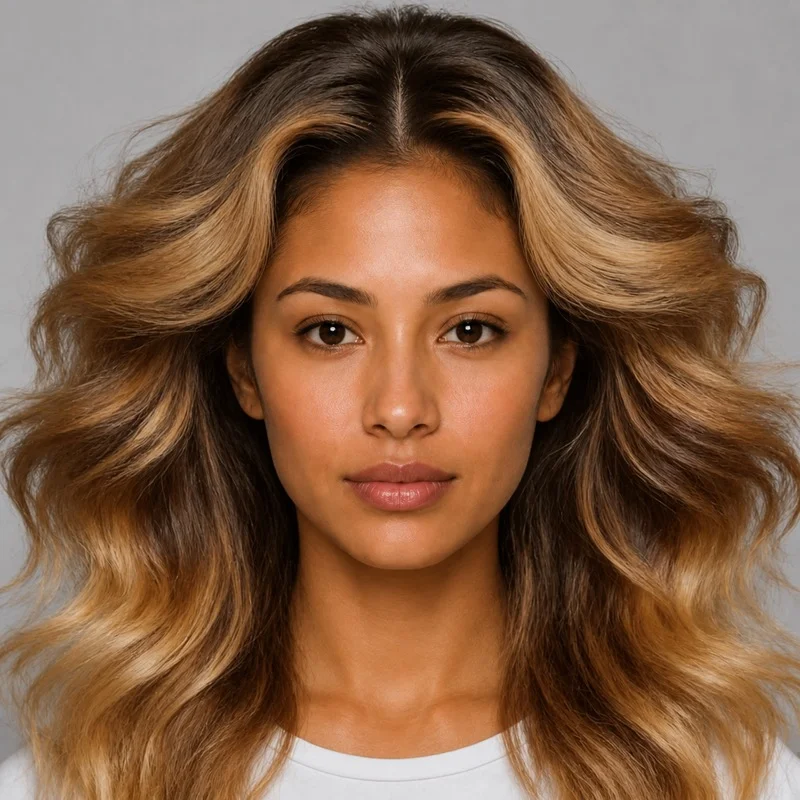
1. Long, Voluminous Balayage Waves
Long, voluminous balayage waves are the easiest all-purpose starting point in this collection. The length stays intact, while layered bends and dimensional color make the hair look fuller and more dynamic. This is a good option if you want a visible update for 2026 but do not want a short perimeter or a high-maintenance fringe.
Ask for long layers that begin around the jaw or below the cheekbone. A few longer face-framing pieces can make the front feel lighter without removing too much density from the ends. For examples, compare warm caramel balayage on a brown base, beige highlights on dark blonde hair, or a subtle tone-on-tone blend for a lower-contrast result.
For styling, try a large-barrel wave, a heatless braid overnight, or a round-brush blowout. Loosen the waves with your fingers instead of brushing from root to end, then add a small amount of oil only to the lower lengths. The finished look can be romantic with a middle part, glamorous with a deep side part, or relaxed with a few pieces tucked behind one ear.
2. Curtain-Bang Waves and Soft Face Framing
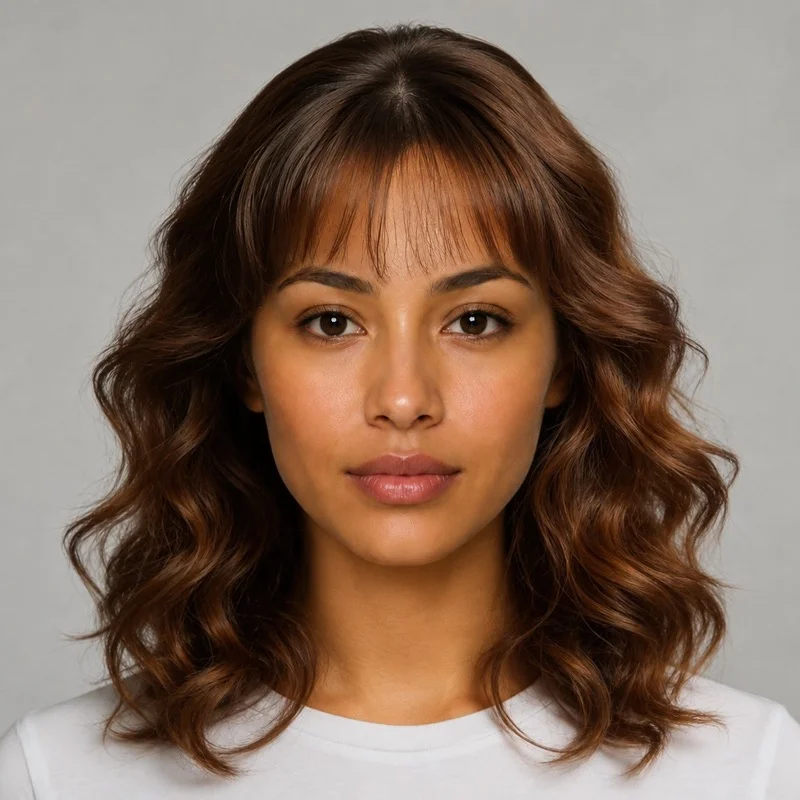
Curtain bangs are a practical way to change the face frame without committing to a heavy straight fringe. The split shape opens at the center and blends into the longer layers, which makes it easier to pin back or grow out. Paired with loose waves, the result feels soft and movement-focused.
There are several ways to adapt this example. Keep the shortest pieces near the brow for a visible fringe, begin lower around the cheekbone for a subtle frame, or blend the bangs into a long layered cut for minimal daily styling. A center part emphasizes symmetry; a slightly off-center part adds more volume on one side.
If you like the idea but rarely use a blow dryer, ask for a longer version that can air-dry into the rest of the cut. If you enjoy styling, a small round brush can turn the front pieces away from the face in a few minutes. Curtain bangs also pair well with a medium lob, a copper tone, or a soft shag for a more textured variation.
3. Short Bobs: Blunt, Wavy, and Asymmetric
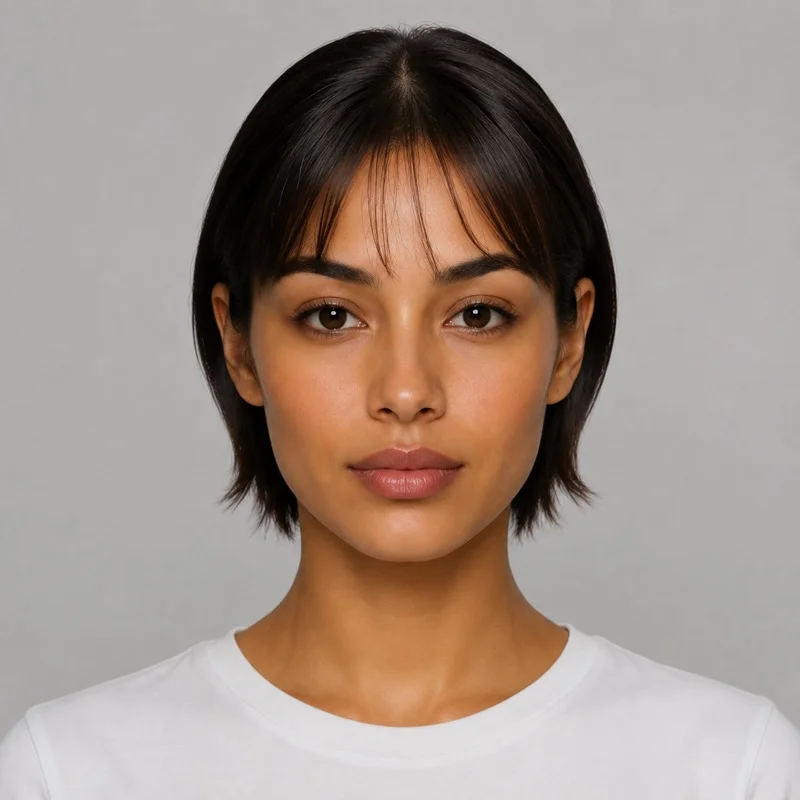
The bob remains one of the most adaptable short hairstyles because small changes create completely different moods. A blunt black bob looks polished and graphic. A wavy bob looks softer and more casual. An asymmetric long bob introduces an angular detail without going as short as a classic crop.
Choose the perimeter based on the finish you want. A strong straight line creates a crisp outline and usually needs regular trims to stay sharp. A lightly textured perimeter is more forgiving as it grows out. If your hair has natural movement, ask how the cut will sit when dry rather than judging the shape only from a blow-dried reference.
More examples from the collection include a short bob with blunt bangs, a wavy bob with curtain bangs, a medium lob with flipped ends, and an asymmetric long bob in a dark color. These are useful references when you like the bob shape but are still deciding between polished, playful, and editorial.
4. Graphic Color: Blue, Split Dye, and Underlayers
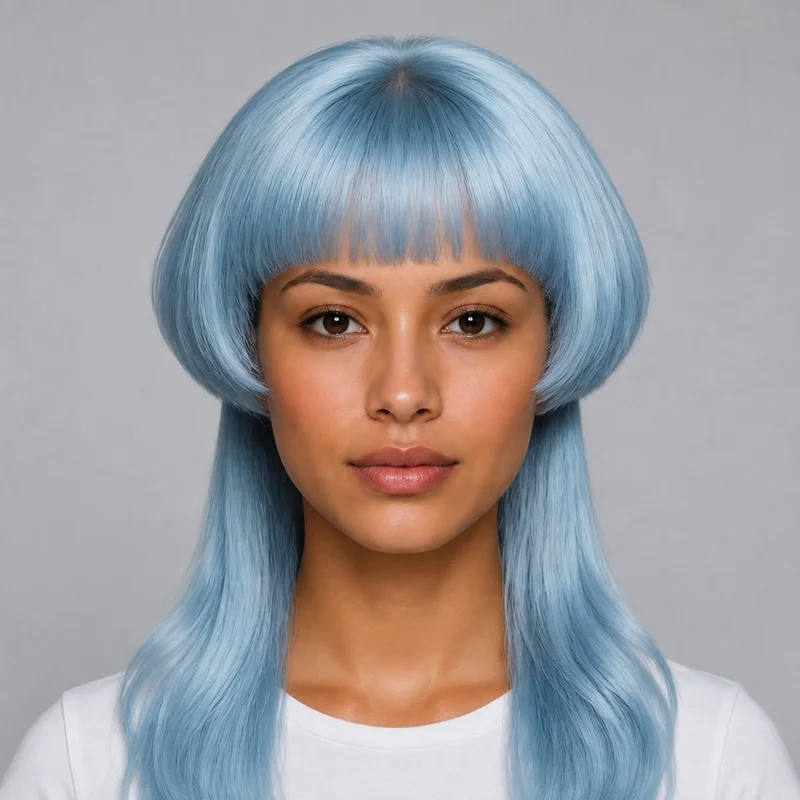
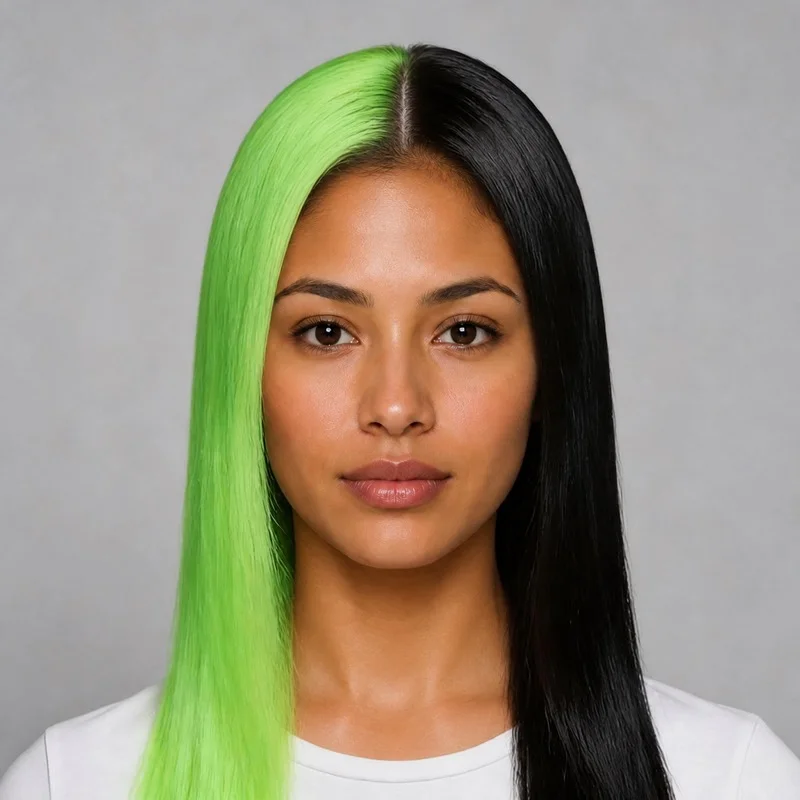
Graphic color works best when the placement is deliberate. A blue bowl bob makes the silhouette and the color equally important. A green-and-black split design keeps a long straight cut simple so the contrast can do the work. A blue underlayer is more discreet: the color appears when the hair is tucked, tied, or moved.
For a blue look, you can compare saturated cobalt, muted denim, slate blue, teal, or blue-black. For a split-color look, decide whether the divide should be perfectly centered, slightly off-center, or limited to a front panel. For an underlayer, decide how much color should show when the hair is down and how dramatic the contrast should be in a ponytail.
The lower-commitment examples are a hidden panel, clip-in pieces, temporary color wax, or a digital preview. If bleaching is required, ask about the maintenance schedule and how the tone will change as it fades. Keep the haircut straightforward if the color is already bold, or use a graphic cut if you want the silhouette and color to reinforce each other.
5. Playful Updos: Space Buns, Bubble Ponytails, and Ribbons
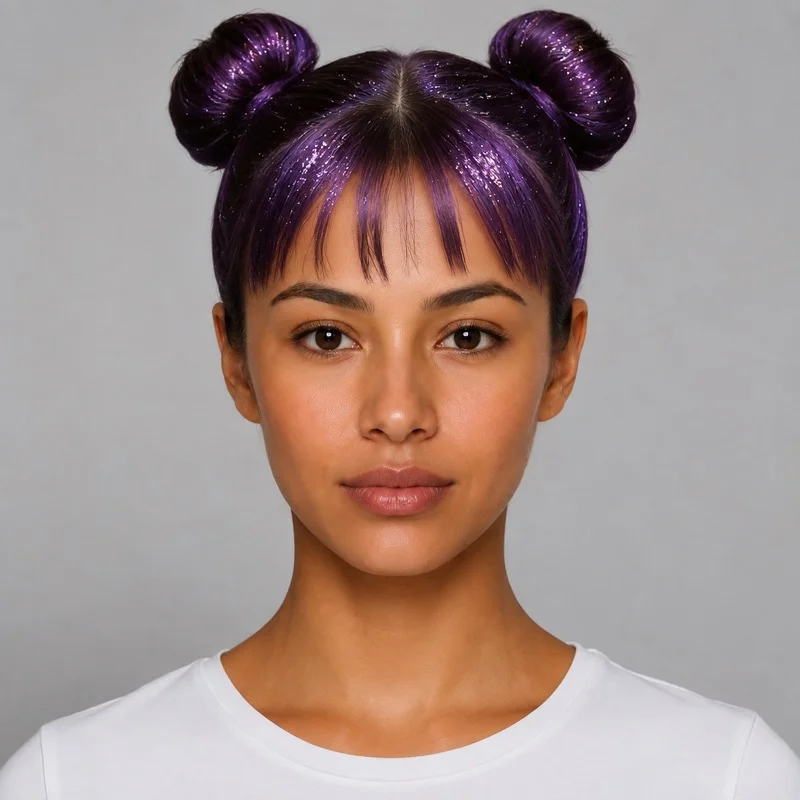
Space buns turn a familiar tied style into a playful graphic shape. Purple double buns are the strongest statement example, but the same construction can feel more everyday in black, brown, or blonde. Place the buns high for energy, closer to the crown for balance, or lower for a softer interpretation. Clean sections look editorial; loose tendrils make the look more relaxed.
Other examples include twin ponytails with ribbons and bubble ponytails in black hair. Ribbons change the mood without a cut or chemical color, while bubble sections add volume and rhythm to a simple ponytail. These styles work especially well for festivals, themed events, portrait sessions, and days when you want the hairstyle to act like an accessory.
When preparing a reference, note the parting, the height of the ponytail, the size of each bubble, and the location of the accessory. “A ponytail with a ribbon” is broad; “two high ponytails, evenly spaced bubbles, and a narrow satin ribbon at each base” gives a much clearer result.
6. Braids That Add Detail Without Changing the Cut
Braids are useful because they can transform long or medium hair for one day without changing the underlying haircut. A side braid keeps the rest of the hair loose and gives the face a directional detail. A crown braid creates a continuous frame around the head. Braided tendrils can be added to a high bun, a ponytail, or a half-up style.
The reference collection includes a blonde side braid, a crown braid with long straight hair, a side braid with a daisy detail, a braid headband, and a high bun with braided tendrils. Each example creates a different balance:
- Side braid: relaxed and asymmetric, with most of the length still visible.
- Crown braid: romantic and structured, especially with soft waves underneath.
- Daisy braid: playful and accessory-led, suitable for spring or outdoor portraits.
- Braid headband: a neat face frame that keeps the front controlled.
- Braided tendrils: a small detail that makes a bun feel more designed.
For a stylist or image reference, specify whether the braid should look tight and polished, loose and bohemian, or textured and slightly undone. The same braid pattern can look formal or casual depending on tension, flyaways, and the amount of hair left around the face.
7. Curly Pixies, Shags, and Copper Texture
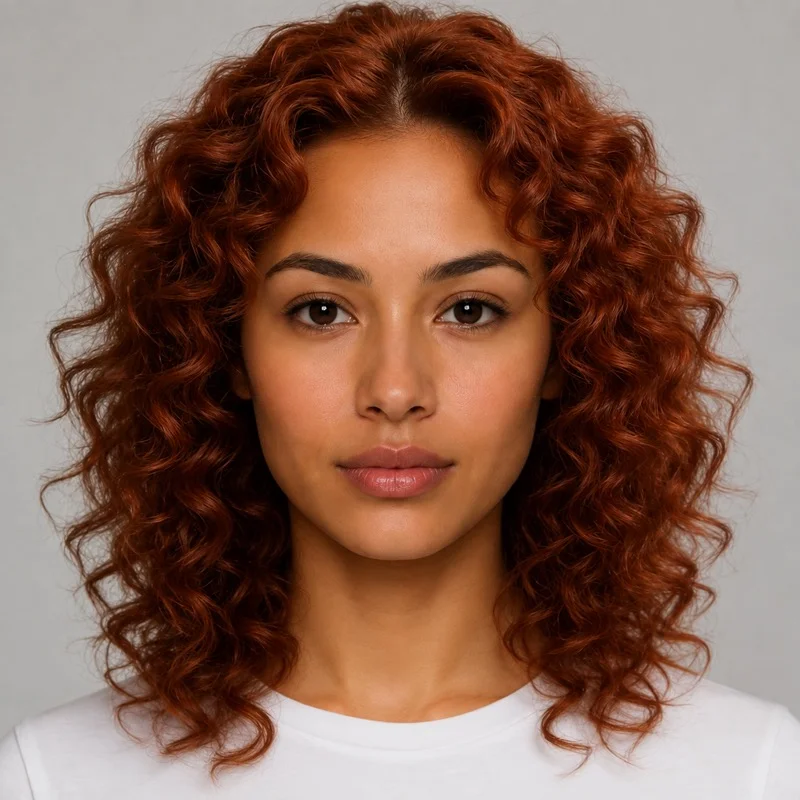
Curly hairstyles for 2026 range from compact pixies to long copper curls. The short curly pixie keeps the silhouette light and lets the curl pattern provide the detail. A medium curly blonde style adds volume around the head. A shaggy cut uses uneven layers to make the texture look airy rather than solid.
Color can shift the mood of the same curl pattern. Copper red feels warm and expressive, blonde makes the curl structure more visible, and dark brown or black creates a deeper, glossier finish. If your hair is naturally curly, bring a reference with a similar density and curl size. A reference with a different curl pattern may still communicate the mood, but it should not be treated as an exact cut blueprint.
Useful salon language includes “keep the curl volume,” “remove weight without thinning the perimeter,” “shorter pieces around the face,” or “let the curls form their own outline.” If you are choosing a digital preview, compare a curly pixie, curly bob, and long curly style separately; the length changes the perceived density as much as the color does.
8. Vintage Waves, Beehives, and Tiara Updos
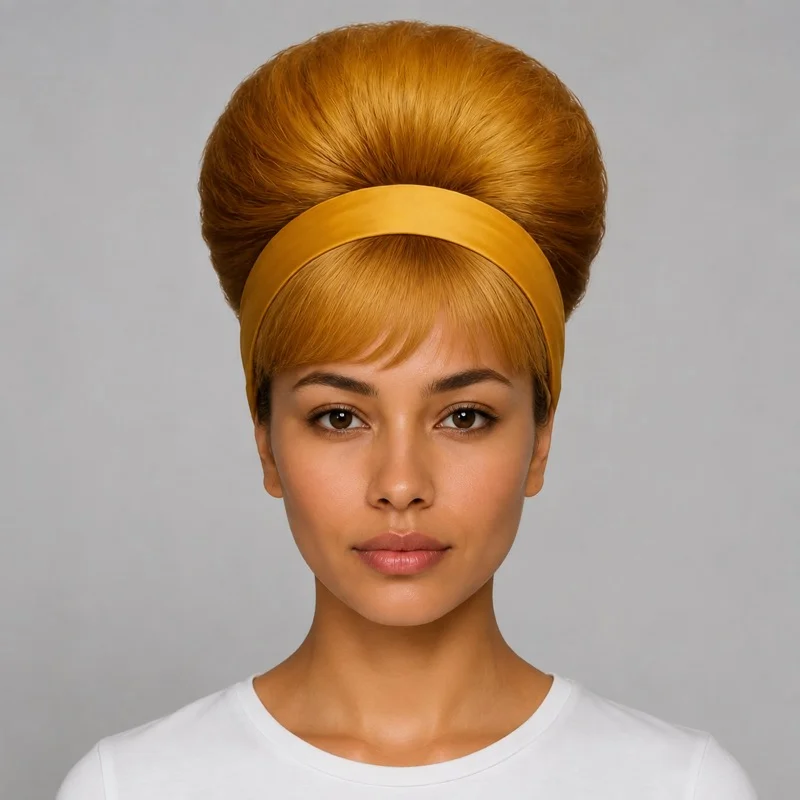
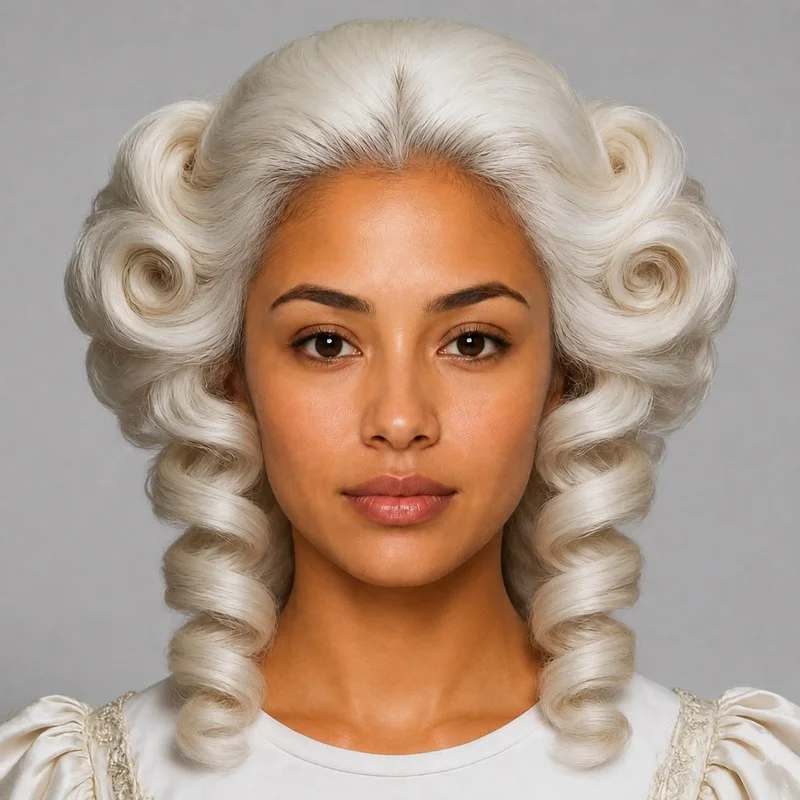
Vintage references are returning as a styling vocabulary rather than a costume. A side-swept wave can look polished with a deep part and glossy finish. A high beehive creates height and drama, especially with a headband or bangs. A tiara updo adds a ceremonial detail for weddings, formal portraits, or fantasy-inspired styling. Defined spiral curls make texture the central feature.
To modernize a vintage look, keep one element simple. Pair a beehive with minimal makeup, use a narrow headband instead of a wide retro one, or combine a side-swept wave with a contemporary hair color. To make the reference more theatrical, add pearl pins, a tiara, a flower, or a high-contrast blonde finish.
Think about proportions before choosing volume. More height changes the visual balance of the whole head, while a lower side-swept shape keeps the look closer to everyday wear. A stylist can also adjust the amount of teasing and the placement of the accessory so the look stays comfortable.
9. Sleek Buns, Ponytails, and Polished Minimalism
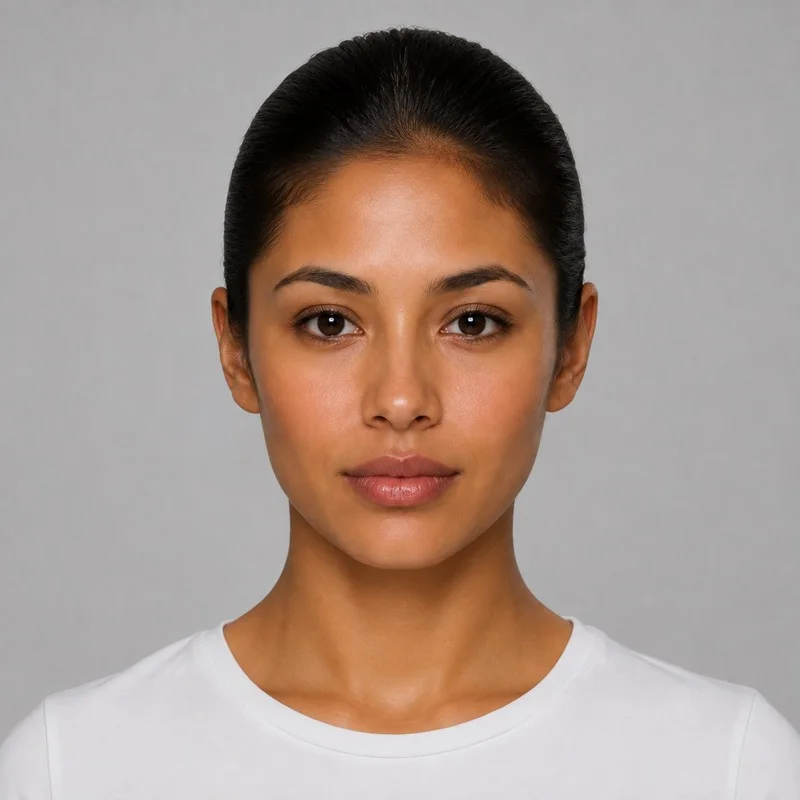
Sleek styles are a useful counterpoint to waves, curls, and statement color. A slicked-back updo exposes the face and creates a clean line from the hairline to the bun. A high bun adds lift and length. A low bun with a side part and pearl detail feels softer and more formal. A high ponytail keeps length visible while making the outline more controlled.
The finish depends on the amount of shine and tension. A wet-look gel finish is editorial; a soft brushed finish feels more wearable. Leave the ends tucked for a minimalist bun, or let a small loop or tendril show if you want the style to feel less severe. For a ponytail, decide whether the base should be hidden with a strand of hair, a ribbon, or a visible accessory.
These examples are practical when your outfit already has texture, pattern, or statement jewelry. The hair becomes a calm frame rather than another competing focal point.
More Examples from the 40-Style Reference Collection
If the featured examples are not quite right, use the following combinations to build a more specific brief:
| If you like... | Combine it with... | Example direction |
|---|---|---|
| Long straight hair | A bold fringe | Long black hair with blunt bangs |
| Platinum color | A compact shape | Platinum pixie or side-parted long hair |
| Nostalgic styling | A wearable cut | Vintage side-swept wave on a medium lob |
| Soft texture | A stronger outline | Wavy bob with curtain bangs |
| Dark hair | A playful accessory | Ribbon ponytails or bubble ponytails |
| A clean updo | A romantic detail | Low bun with pearl or braided accents |
| A short cut | More movement | Short shaggy cut or curly pixie |
| Long color | A hidden surprise | Blue underlayer or pastel pink waves |
| A braid | A formal finish | Braid headband with a sleek bun |
| Maximum contrast | A simple silhouette | Green-and-black split color on long straight hair |
The collection also includes a platinum side part, double blonde braids, a black vintage wave, medium shaggy hair, a brown buzz cut, a short wavy bob, a high ponytail, a sleek high bun, and a long black bow wave. These are useful search terms when you want to compare several directions before choosing one.
How to Choose a 2026 Hairstyle for Your Routine
The most attractive reference is not always the most practical one for your week. Use this process before making a salon appointment:
- Choose the maintenance level first. Low-maintenance options include longer layers, a medium lob, natural-looking waves, and color close to your base. Higher-maintenance options include short blunt outlines, vivid fashion color, precise bangs, and high-volume updos.
- Choose the primary change. Decide whether the biggest change should be length, shape, texture, color, or styling. A long cut with vivid split color is a bigger commitment than either change by itself.
- Match the reference to your texture. Straight, wavy, and curly examples communicate different styling requirements. Save a second reference showing how the look behaves with a similar texture to yours.
- Check the grow-out. Ask what the style will look like after six weeks. A cut that looks perfect on day one should still have a good outline as it grows.
- Prepare a three-image brief. Bring one image for the silhouette, one for the texture, and one for the color or accessory. This gives your stylist room to adapt the idea to your hair.
- Preview before committing. A digital preview can help you compare a blue bob, a copper curl, a long wave, or a sleek updo on a portrait before making a permanent decision.
Preview Your Next Look Before the Appointment
Reference images are useful, but it can be difficult to imagine a cut or color on your own face. Veyvia's AI Hairstyle Changer lets you upload a portrait, explore hairstyle references, test hair colors, and compare different directions before you commit. Try a few contrasting examples—such as a short bob, long waves, and a sleek updo—to learn which type of change feels most like you.
For better comparisons, start with a clear front-facing portrait and keep the lighting even. Use the photo editor to crop or prepare the image, and the image enhancer if the reference photo is soft or difficult to inspect. You can also browse Veyvia's creative collections and other articles for more visual ideas.
Hairstyle FAQ
What is the most versatile trending women's hairstyle for 2026?
Long layered waves, curtain-bang styles, bobs, and low buns are among the most adaptable starting points because they can be adjusted in length, texture, and finish. The right choice depends on how much daily styling and color maintenance you want.
Which 2026 hairstyle is easiest to personalize?
Start with a familiar shape such as a bob, long layers, a ponytail, or a bun, then personalize it with a fringe, ribbon, braid, underlayer, or temporary color. This lets you change the visual identity without changing every part of the haircut.
Are split-color hairstyles high maintenance?
They can be, especially when the colors require lightening or the sections need to stay sharply separated. A hidden underlayer, front panel, or temporary color product can create a similar effect with easier grow-out.
How do I choose between a bob and a pixie?
Choose a bob if you want a defined shorter shape while keeping enough length to tuck behind the ear or tie back partially. Choose a pixie if you want the haircut itself to be the main change and are comfortable with more frequent shape maintenance.
Can I use a hairstyle reference if my hair texture is different?
Yes, but use the image to communicate the mood, outline, or color rather than expecting an identical result. Add a second reference that matches your hair density and texture so the final plan is realistic.
Final Takeaway
The strongest trending women's hairstyles for 2026 are not limited to one length or aesthetic. Long balayage waves add movement, curtain bangs refresh the face frame, bobs create a clear outline, graphic colors make a statement, braids add detail, curls show texture, and sleek or vintage updos change the mood for a specific occasion.
Start with the design layer you care about most, collect a few complementary examples, and preview the combination before you book a major cut or color change. When you are ready to compare the looks on your own photo, try Veyvia's AI Hairstyle Changer.