Low-Poly Art prompt library

Low-Poly Art AI Image Prompts

Browse low-poly art examples and reusable AI image prompts for composition, lighting, color, materials, and style.

Browse a focused low-poly art category based on the PromptPlum taxonomy. Use the references as starting points, then rewrite each prompt for your own subject, format, and visual goal.
Visual reference set
low poly art
Library size
2 public prompts
Visual reference set02 / REF
Low-Poly Art AI Image Prompts reference 101
Low-Poly Art AI Image Prompts reference 202
VEYVIA / LOW-POLY-ARTCURATED
Prompt library

Choose the closest frame to begin.

Open any reference to inspect the full prompt, or take its image and aspect ratio straight into the generator.

2 public prompts
Low-Poly Art AI Image Prompts prompt 101
low-poly artlow-poly-artorigami-papercraft

Create a minimalist 3D origami papercraft studio render of a [SUBJECT] in a [PRIMARY COLOR] and [SECONDARY COLOR] paper design, featuring clean geometric low-poly folds and layered paper construction. Include [TOPPING/DETAILS], [ACCESSORY 1], and [ACCESSORY 2] with matching papercraft styling. Place it against a seamless [BACKGROUND COLOR] studio backdrop with soft directional lighting, subtle shadows, crisp edges, and a premium handcrafted paper aesthetic. Highly detailed, realistic paper texture, centered composition, studio-quality render.

Low-Poly Art AI Image Prompts prompt 202
low-poly artai image promptsprompt library

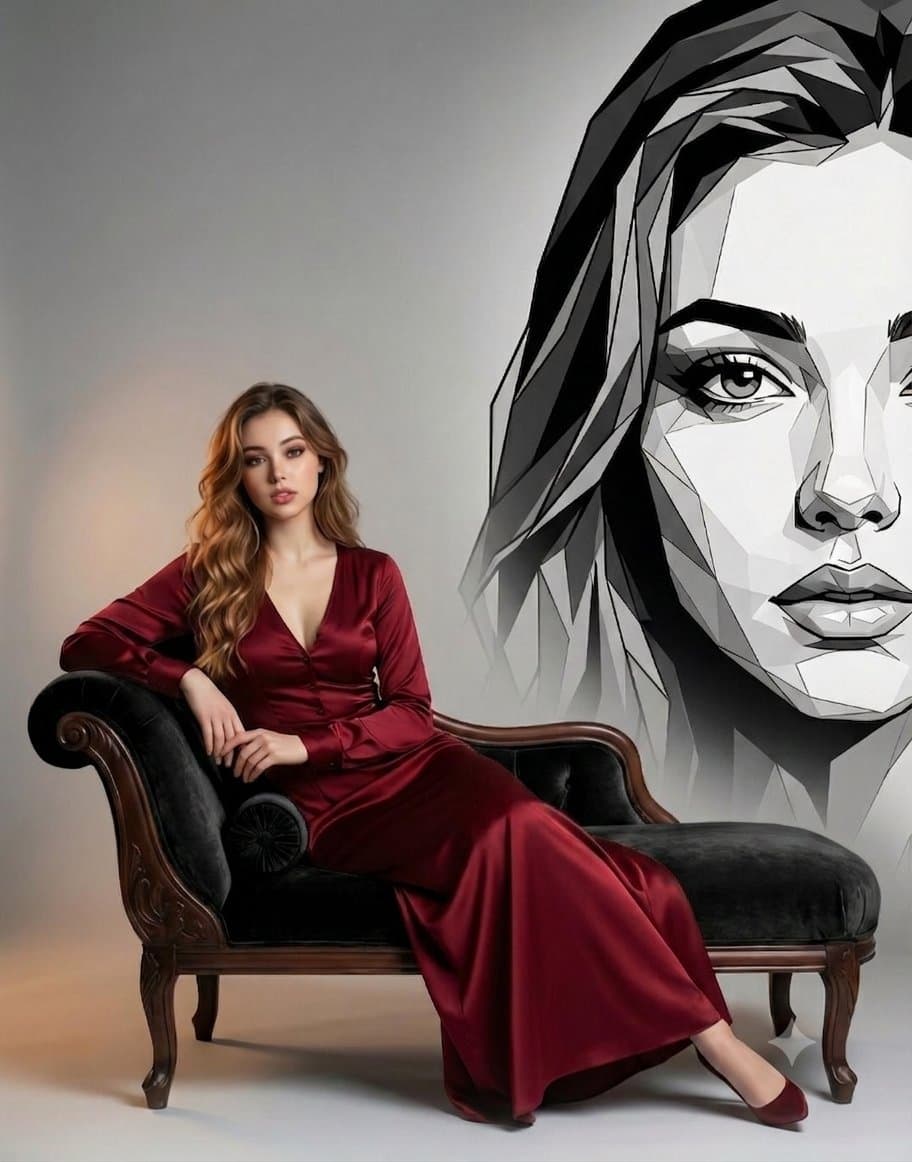
Elegant luxury fashion editorial portrait, beautiful woman seated gracefully on a vintage black velvet chaise lounge, wearing a deep burgundy satin gown with flowing fabric and subtle sheen, soft wavy hair, confident gaze toward camera, minimalist light gray studio backdrop. Behind her, a massive black-and-white geometric low-poly mural portrait of the same woman dominates the wall, creating a striking contrast between realism and abstract art. High-fashion magazine aesthetic, luxury interior styling, dramatic composition, soft cinematic lighting, premium textures, photorealistic skin, shallow depth of field, sophisticated color grading, editorial photography, Vogue-style campaign, ultra-detailed, 8K, masterpiece, clean shadows, modern gallery atmosphere, centered composition, elegant and timeless mood.

Reference to result

Three steps forward, without starting from a blank canvas.

  1. 01

    Pick a reference

    Choose the frame closest to your goal in composition, color, and purpose.

  2. 02

    Adjust the details

    Change the subject, copy, style, and image ratio in the generator.

  3. 03

    Generate the image

    Keep the prefilled reference, generate, then refine from the result.

Nothing quite fits?

Start with a blank prompt and define the subject, composition, typography, and aspect ratio yourself.

Create from scratch
Working notes

Get closer to a finished image on the first pass.

01

About Low-Poly Art prompts

Low-Poly Art prompts help organize visual ideas around a specific style, subject, medium, or photography use case. Published examples may change as the collection grows.

02

How to write a stronger Low-Poly Art prompt

Name the main subject first, then define composition, environment, lighting, palette, materials, camera or rendering technique, aspect ratio, and the intended output.

03

How to refine the generated result

Remove conflicting style instructions, keep one clear visual direction, and review anatomy, text, logos, perspective, and important category-specific details before publishing.

Common questions

A few things to know before you begin.

What are Low-Poly Art AI image prompts?

They are reusable visual briefs grouped under the Low-Poly Art category. Each brief can be adapted to a different subject, reference image, composition, or output size.

How are Low-Poly Art examples selected for this collection?

Published prompts are assigned to this collection when their subject, style, or intended use matches the Low-Poly Art category.

Can I customize these Low-Poly Art prompts?

Yes. Replace the subject and context, then adjust the lighting, palette, materials, lens or rendering method, aspect ratio, and detail level for your project.