Monochrome Portrait prompt library

Monochrome Portrait AI Image Prompts

Browse monochrome portrait examples and reusable AI image prompts for composition, lighting, color, materials, and style.

Browse a focused monochrome portrait category. Use the references as starting points, then rewrite each prompt for your own subject, format, and visual goal.

Visual reference set
black and white portrait
Library size
5 public prompts
Visual reference set04 / REF
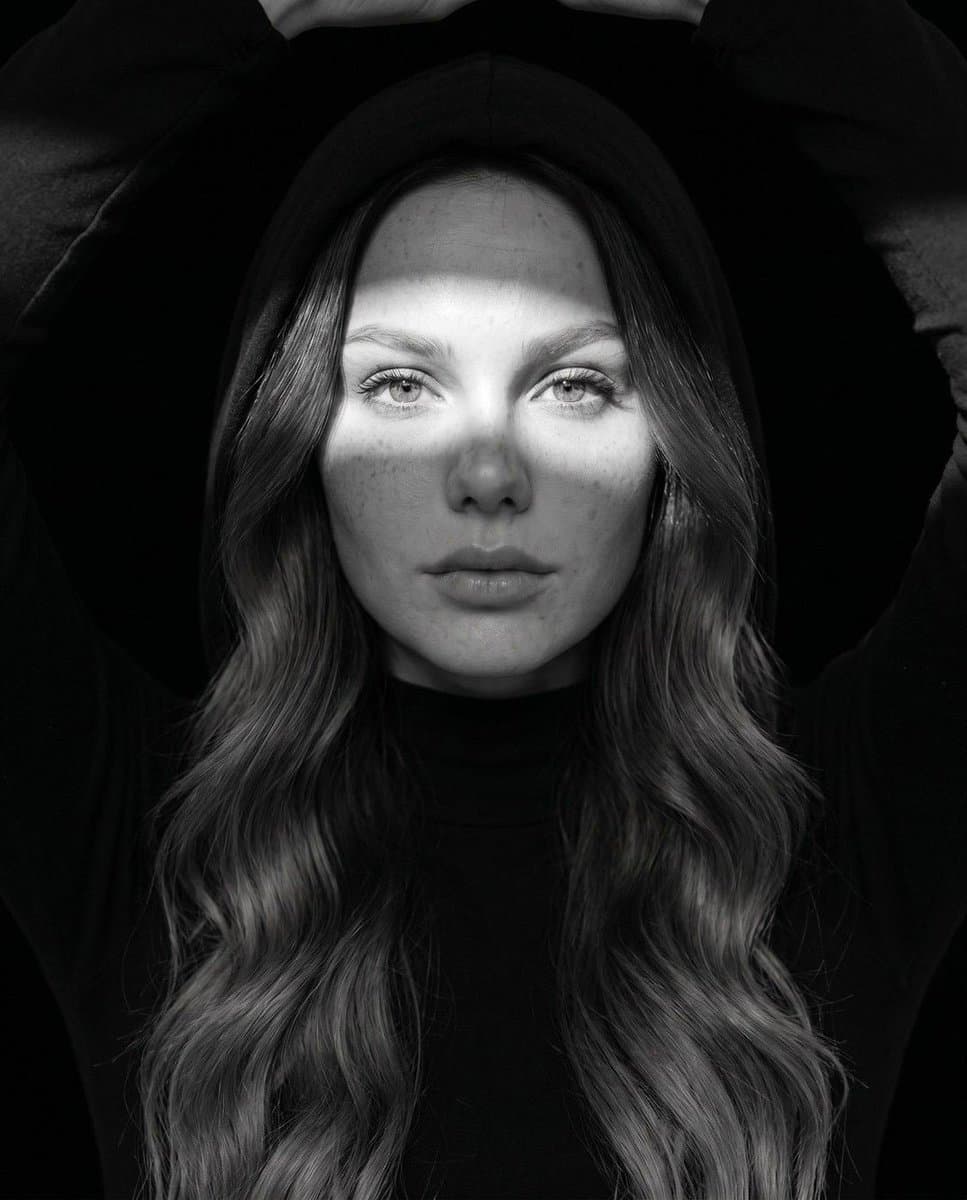
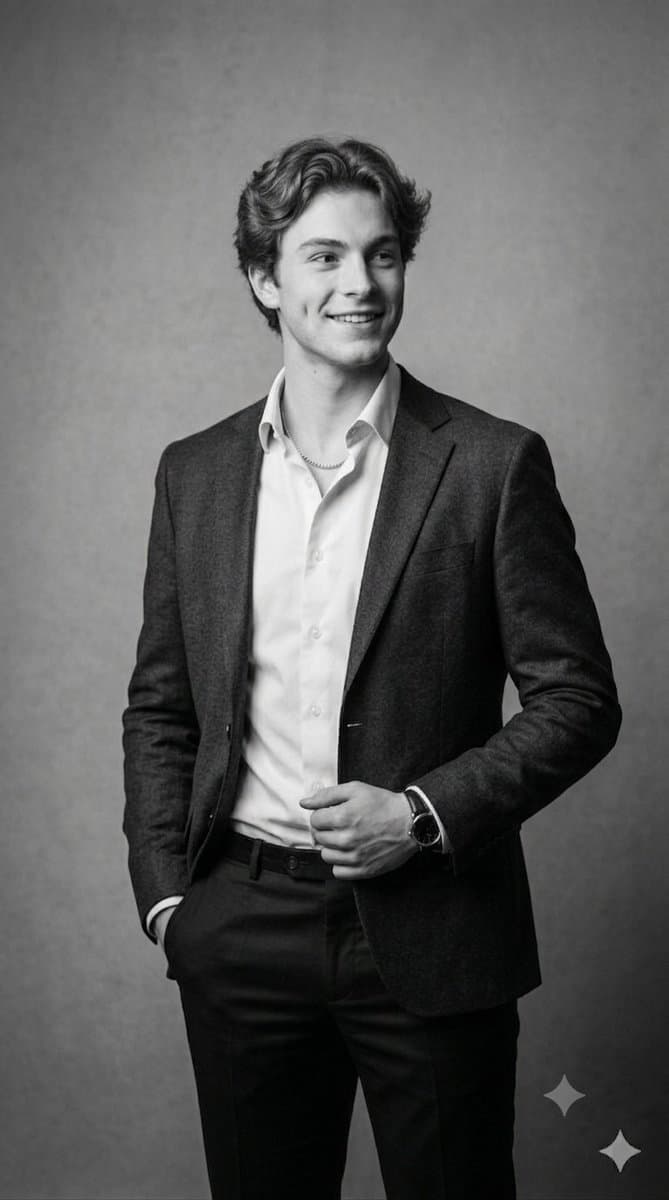
Monochrome Portrait AI Image Prompts reference 101
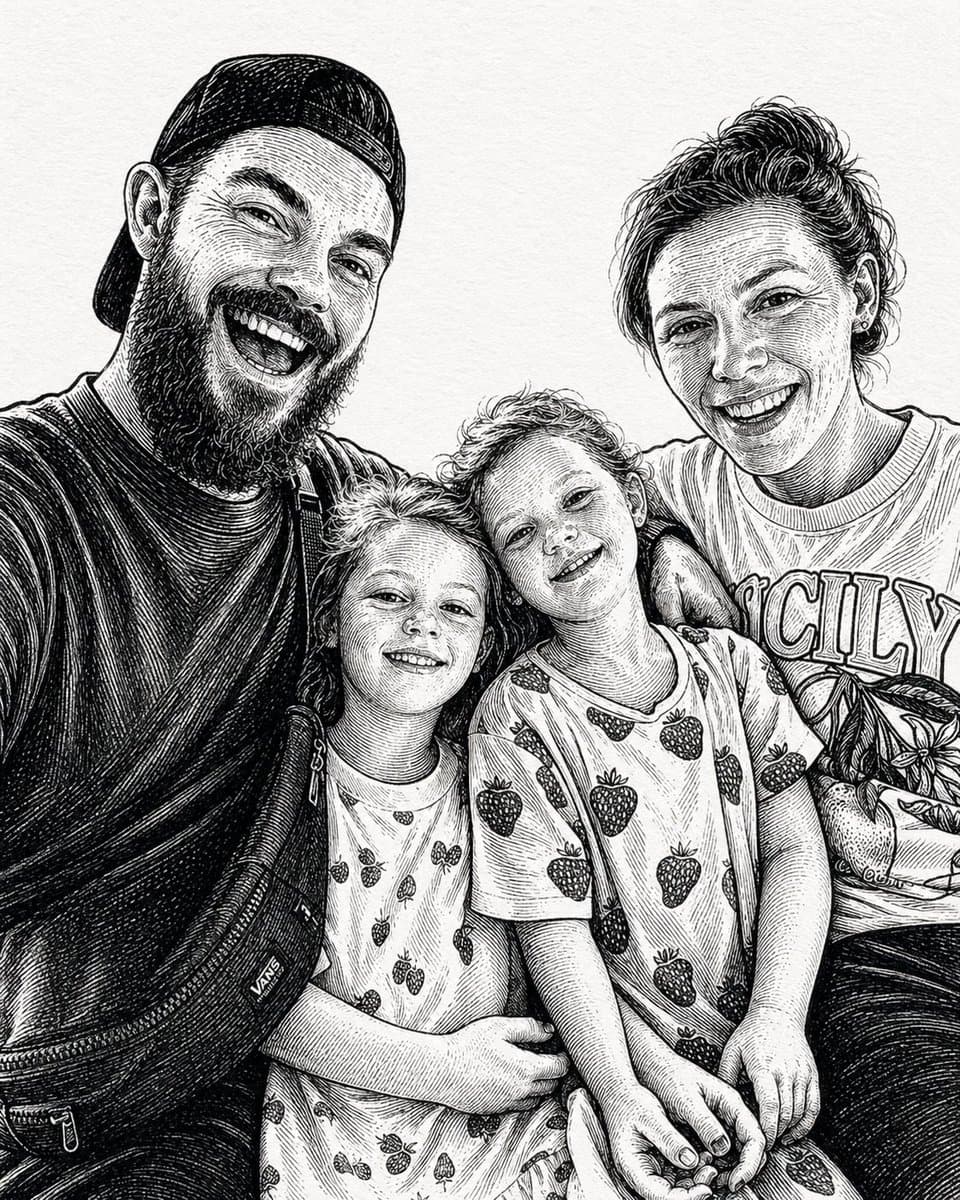
Monochrome Portrait AI Image Prompts reference 202
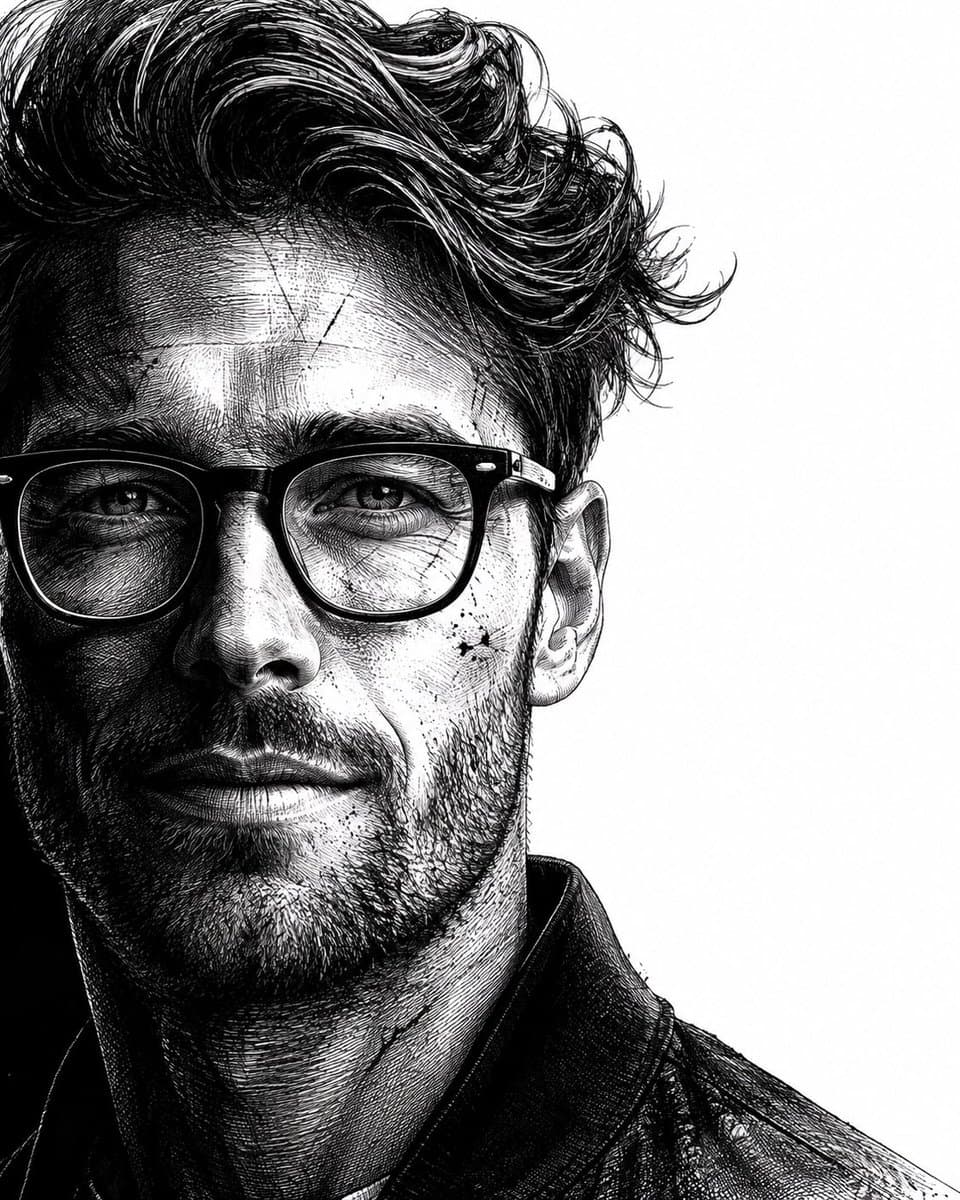
Monochrome Portrait AI Image Prompts reference 303
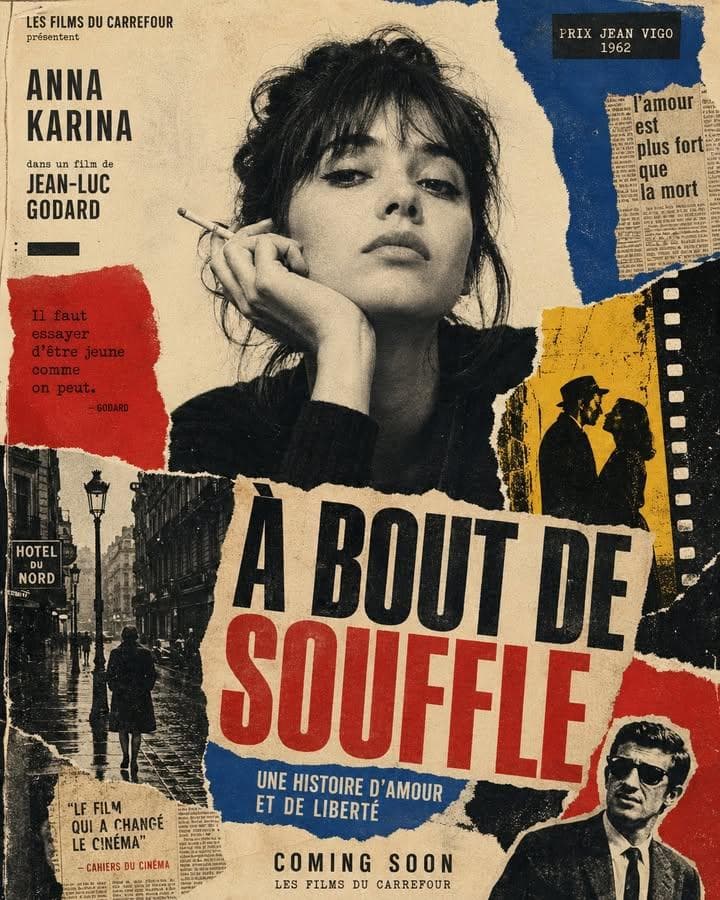
Monochrome Portrait AI Image Prompts reference 404
VEYVIA / BLACK-AND-WHITE-PORTRAITCURATED
Prompt library

Choose the closest frame to begin.

Open any reference to inspect the full prompt, or take its image and aspect ratio straight into the generator.

5 public prompts
Monochrome Portrait AI Image Prompts prompt 101
black-and-white-portraitcross-hatchingfamily-portrait

Create a monochrome hand-drawn family portrait rendered in detailed pen-and-ink crosshatching on textured white paper. Four people sit casually together, with two adults framing two young children in a warm protective arrangement. Preserve recognizable hairstyles, clothing silhouettes, accessories, expressions, and natural body language from the reference image. Use dense fine-line hatching, engraved-style shadows, crisp contour lines, realistic proportions, and an elegant illustrative quality. No color and no environmental background, only a plain light paper texture with a vertical portrait crop.

Monochrome Portrait AI Image Prompts prompt 202
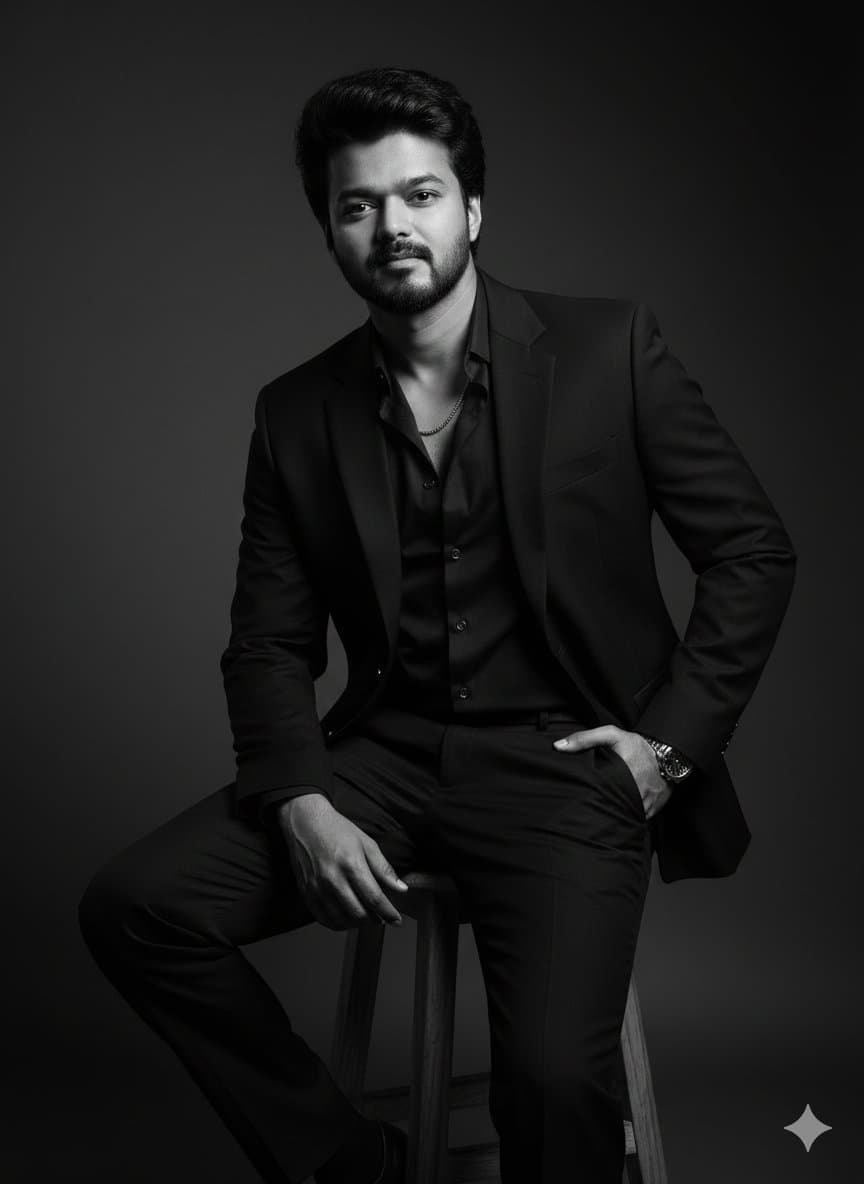
black-and-white-portraitcinematic-portraitdramatic-lighting

Use the uploaded reference image as a strict identity lock, preserving facial structure, proportions, skin texture, eyes, lips, nose, brows, and natural expression. Create a powerful executive portrait of the subject seated on a wooden stool in a relaxed but dominant pose, one arm resting on a leg and the other hand inside a trouser pocket. Dress the subject in a fitted all-black suit with a slightly open black shirt, a subtle silver chain, and a small silver watch. Use a dark studio backdrop, black-and-white treatment, soft directional lighting, dramatic shadows, cinematic depth, and a confident intense expression. Do not modify the face.

Monochrome Portrait AI Image Prompts prompt 303
black-and-white-portraitclose-up-portraiteditorial-photography

Create an ultra-realistic fine-art black-and-white close-up portrait with a centered composition and direct eye contact. Give the subject a calm but emotionally powerful expression, natural skin texture with subtle freckles and pores, and razor-sharp eyes with clear catchlights. Use dramatic Rembrandt lighting, deep blacks, luminous highlights, rich grayscale tonal range, an 85mm lens at f/1.8, and shallow depth of field. Keep the composition minimalist and timeless with premium medium-format detail, museum-quality editorial photography, cinematic contrast, and no text or watermark.

Monochrome Portrait AI Image Prompts prompt 404
black-and-white-portraitclose-up-portraitcross-hatching

Use the uploaded reference image as the identity source. Preserve the subject's identity with maximum accuracy. Maintain the original facial structure, facial proportions, skin tone, eye shape, nose, lips, eyebrows, age, and all unique identifying features. Do not replace, reinterpret, beautify, or alter the person's identity. Transform only the artistic style while keeping the subject instantly recognizable. Create a hyper-realistic, dramatic black-and-white neo-noir assassin portrait illustrated in an ultra-detailed ink engraving and cross-hatching style. COMPOSITION & FRAMING • Vertical 4:5 aspect ratio. • Position the subject on the far left with virtually no left margin. • The subject should occupy approximately 60–65% of the frame. • Keep the remaining 35–40% on the right as clean white negative space with no distractions. • Show approximately two-thirds of the face using a vertical crop passing near the center of one eye. • Tight cinematic close-up: - Top crop slightly through the hair. - Bottom crop just above the shoulders. • Face oriented almost directly toward the viewer with only a subtle forward angle. • The eyes must be the strongest visual focal point. HAIR (ADAPTIVE TO REFERENCE) Analyze the hairstyle from the reference image and recreate it faithfully while enhancing it with a dramatic neo-noir aesthetic. Preserve: • Overall hairstyle • Hairline • Length • Parting • Natural texture • Volume • Curl or wave pattern Enhance with: • Rich, highly detailed strand rendering • Natural thickness and density • Dynamic movement and layered flow • Slightly windswept appearance • Subtle damp or wet texture • Individual flyaway strands • Fine engraved line work • High-detail cross-hatching throughout the hair The hairstyle should remain authentic to the reference while appearing cinematic and intense. FACIAL HAIR (ADAPTIVE) Analyze the reference image and preserve the subject's natural facial-hair characteristics. If clean-shaven: • Add only subtle rugged skin texture with extremely light natural stubble. If light stubble: • Increase density slightly while maintaining realism. If a beard or mustache is present: • Preserve the original style while enhancing depth, texture, and volume using engraved strokes. Render facial hair using: • Individual hair strokes • Cross-hatched shadowing • Natural density • Strong facial contour definition • Rugged but believable appearance (For subjects without facial hair, do not add a full beard.) SKIN TEXTURE Create a battle-hardened cinematic appearance using: • Fine skin texture • Subtle scars • Light scratches • Tiny ink splatter accents • Engraved pores • Dense cross-hatching instead of smooth gradients • High-detail etched shading LIGHTING Extreme noir chiaroscuro lighting. • One side of the face illuminated dramatically. • The opposite side fades into deep shadow. • Strong directional contrast. • Shadows created entirely through dense engraved cross-hatching. • Extremely high contrast with rich blacks and bright whites. ILLUSTRATION STYLE Ultra-detailed ink engraving illustration featuring: • Dense cross-hatching • Fine line engraving • Ink scratches • Etched textures • Vintage engraving techniques • Graphic novel aesthetics • Crime-thriller poster style • Museum-quality monochrome illustration • Crisp, razor-sharp line work BACKGROUND • Pure white background. • Large clean negative space on the right. • No objects. • No patterns. • No textures. • No distractions. MOOD Dark, cinematic, mysterious, and powerful. The subject should project calm confidence, unwavering determination, and quiet intensity, resembling a legendary neo-noir protagonist while remaining unmistakably the same person as in the reference image. QUALITY Ultra-high resolution, hyper-realistic engraving detail, razor-sharp focus, exceptional micro-detail, dramatic contrast, premium editorial composition, masterpie
Monochrome Portrait AI Image Prompts prompt 505
black-and-white-portraiteditorial-designmixed-media-collage

GPT image 2 on ChatGPT Create a vertical poster composition on aged cream paper with a handmade analog feel. Use rough ripped paper edges, layered magazine cutouts, photocopy grain, halftone texture, ink bleed, and slightly imperfect screen-print registration. Keep the subject as the main black-and-white photographic portrait, placed prominently in the center or upper center. Surround the subject with graphic blocks of deep red, cobalt blue, warm yellow, black, and ivory. Add supporting collage fragments such as a rainy European street, film-strip borders, newspaper clippings, urban silhouettes, and cinematic details, arranged like a handmade 1960s art-house movie poster. Use bold condensed typography with a strong visual hierarchy. Add large headline text: “[MAIN TITLE]”. Add smaller subtitle text: “[SUBTITLE]”. Add bottom text: “[BRAND NAME / EVENT NAME / COMING SOON / DATE]”. If needed, include a small top line reading “[TAGLINE]”. The final result should feel cinematic, intellectual, rebellious, and editorial — like a lost 1960s European film poster with a strong point of view. Keep it raw, tactile, printed, imperfect, and handmade. Avoid a glossy modern finish.

Reference to result

Three steps forward, without starting from a blank canvas.

  1. 01

    Pick a reference

    Choose the frame closest to your goal in composition, color, and purpose.

  2. 02

    Adjust the details

    Change the subject, copy, style, and image ratio in the generator.

  3. 03

    Generate the image

    Keep the prefilled reference, generate, then refine from the result.

Nothing quite fits?

Start with a blank prompt and define the subject, composition, typography, and aspect ratio yourself.

Create from scratch
Working notes

Get closer to a finished image on the first pass.

01

About Monochrome Portrait prompts

Monochrome Portrait prompts help organize visual ideas around a specific style, subject, medium, or photography use case. Published examples may change as the collection grows.

02

How to write a stronger Monochrome Portrait prompt

Name the main subject first, then define composition, environment, lighting, palette, materials, camera or rendering technique, aspect ratio, and the intended output.

03

How to refine the generated result

Remove conflicting style instructions, keep one clear visual direction, and review anatomy, text, logos, perspective, and important category-specific details before publishing.

Common questions

A few things to know before you begin.

What are Monochrome Portrait AI image prompts?

They are reusable visual briefs grouped under the Monochrome Portrait category. Each brief can be adapted to a different subject, reference image, composition, or output size.

How are Monochrome Portrait examples selected for this collection?

Published prompts are assigned to this collection when their subject, style, or intended use matches the Monochrome Portrait category.

Can I customize these Monochrome Portrait prompts?

Yes. Replace the subject and context, then adjust the lighting, palette, materials, lens or rendering method, aspect ratio, and detail level for your project.